
Dravet Journeys
Every Dravet Syndrome journey is unique. Read more stories here.
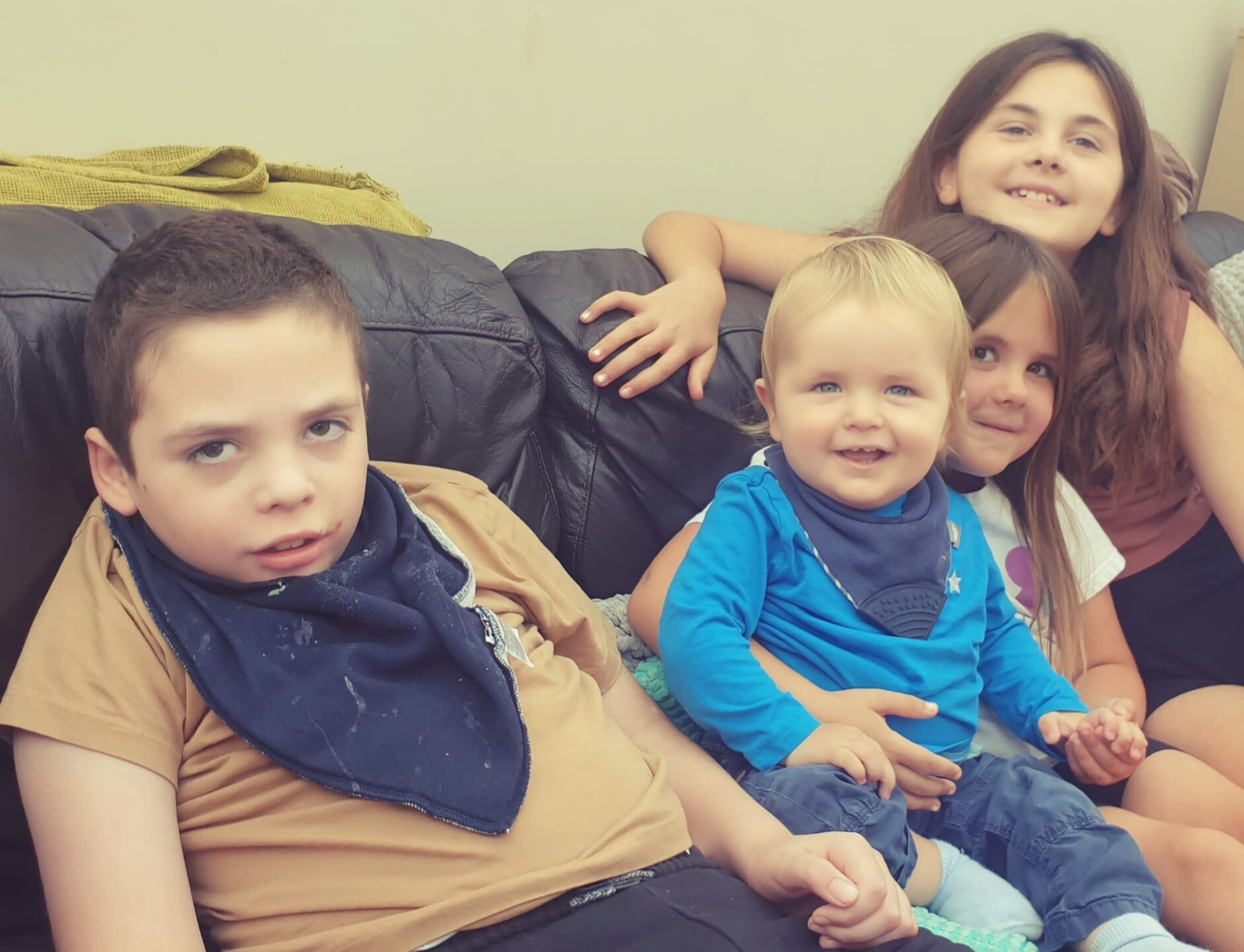
George had his first seizure at around seven months old. He lives with his Mum Susan, Dad Tim, Sisters Evelyn and Lillian and brother Billy. Mum, Susan, tells their story.
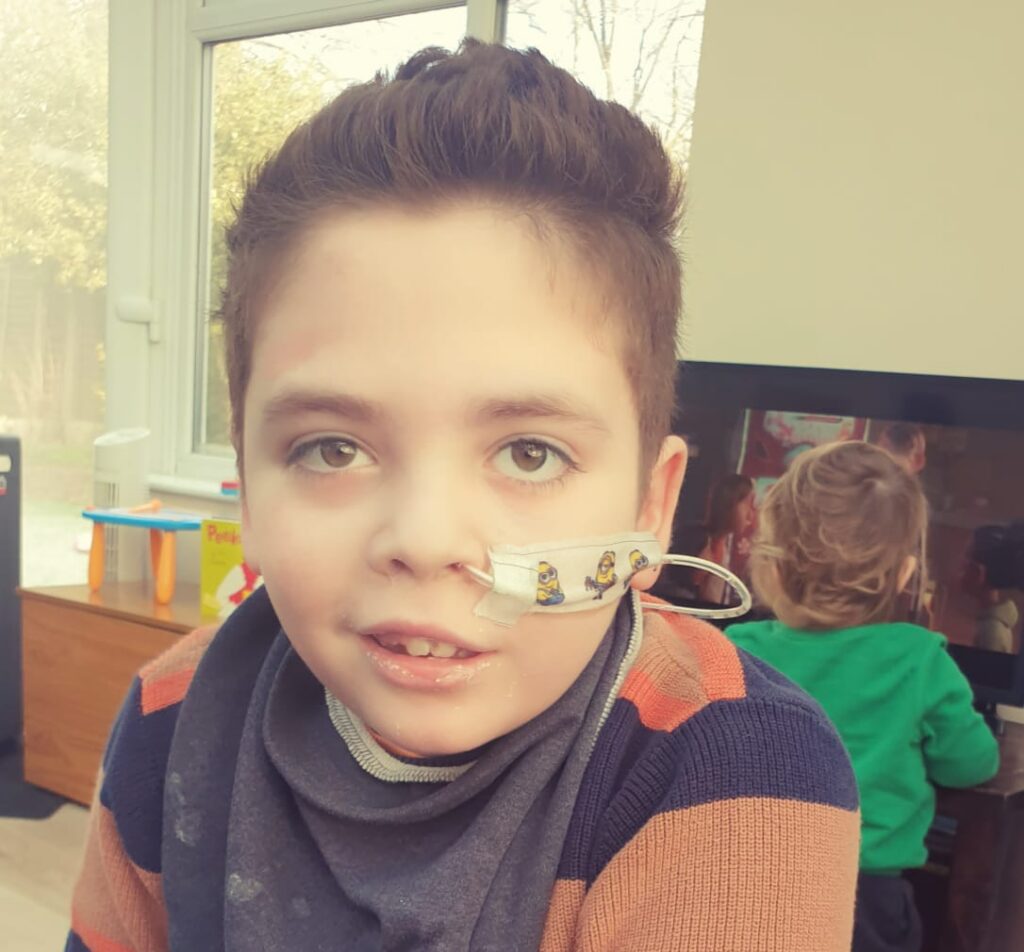
George was a premature baby and had chronic breathing problems from birth. He was in and out of hospital. He then got Sepsis and was very, very poorly. Looking back, we realise that smaller seizures began at around seven months but were missed because he was so ill with breathing problems. At 11 months George had his first large seizure and I’ll never forget it as it was so traumatic.
I heard a noise on the baby monitor and went to check he was okay. He was having a full-blown seizure. I managed to stay calm and called an ambulance. By the time it came, he had a temperature of 41 degrees. The staff at A&E knew us because we’d been in hospital so often already and although his temperature had gone down, they kept him in for observation as I had this unshakable feeling that something wasn’t quite right.
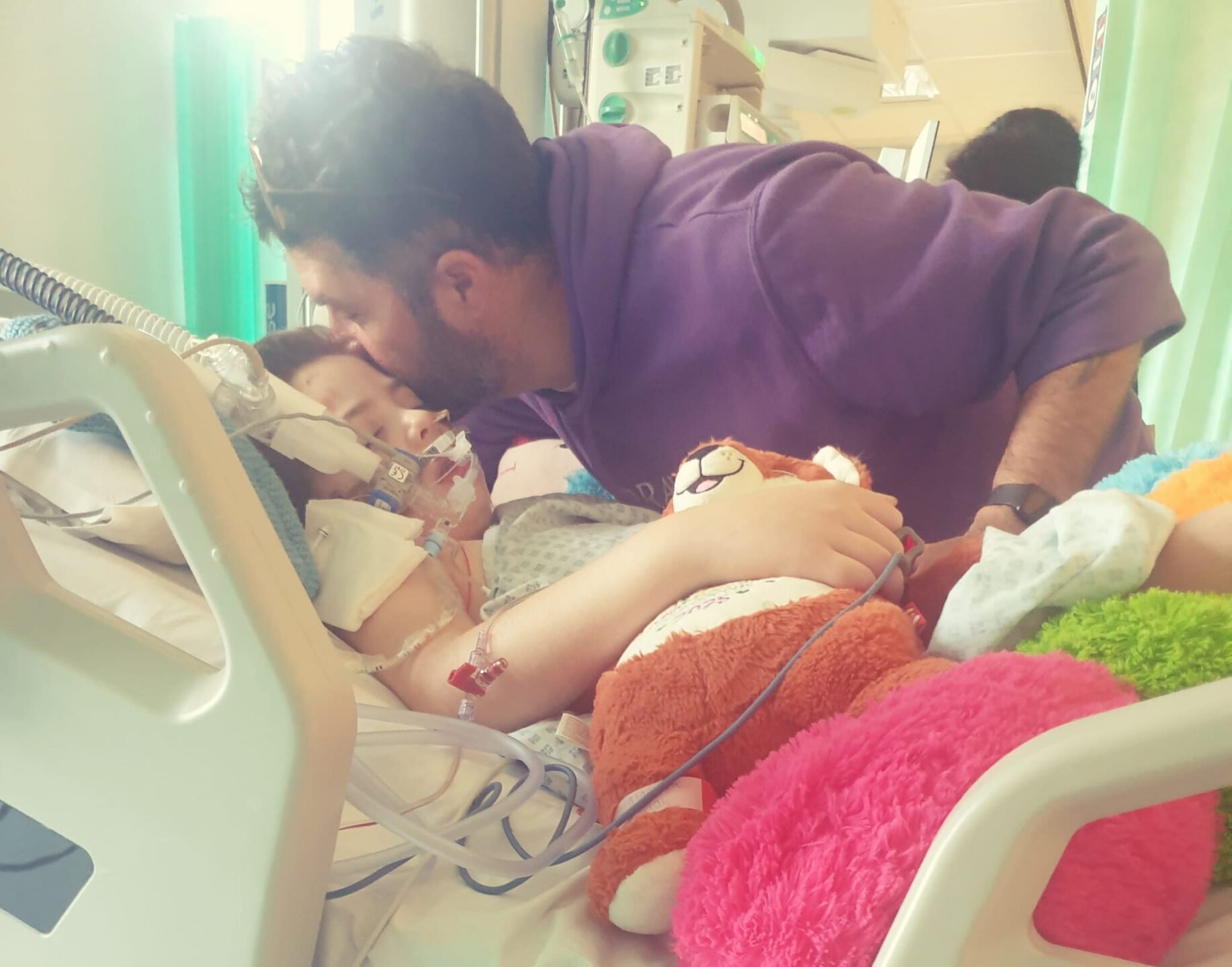
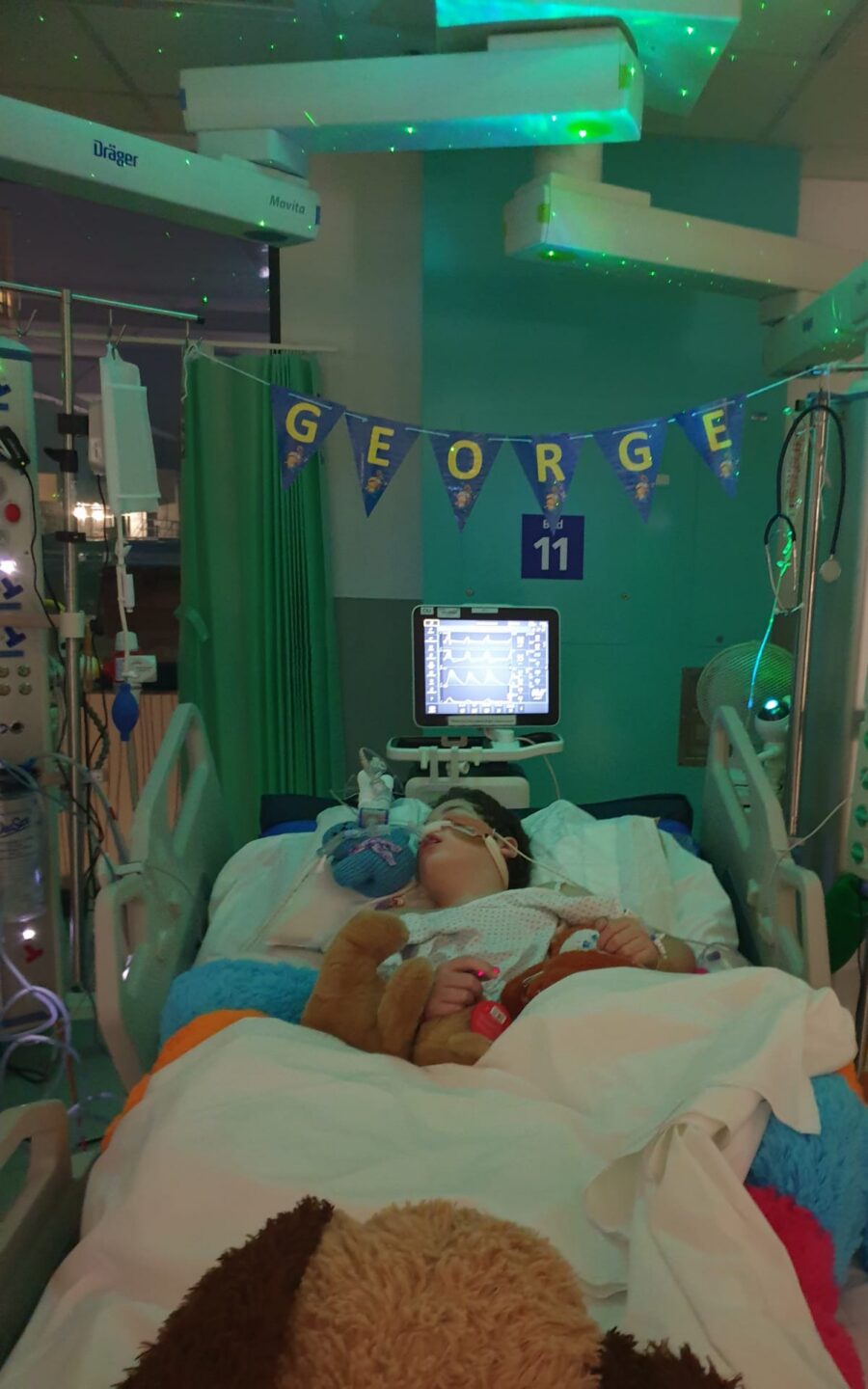
Within 2.5 hours, George had gone into another huge seizure, and we were dealing with an emergency. The room filled, and he was surrounded by medics who had to drill into his shin to access his vein. He was taken into intensive care and remained there for ten days. We were actually told to prepare ourselves and to say goodbye because he was so gravely poorly. George pulled through. He had his first birthday the following Tuesday and he spent it in a coma.
At that point we still didn’t know what was wrong. We were told it was febrile seizures, that it was “just bad luck” that they were so bad and that he would outgrow them.
Gaining a diagnosis
Within weeks, George was blue-lighted to hospital again with a large seizure, and eventually after more seizures, doctors decided to do some tests.
He was diagnosed just after his third birthday, coinciding with the start of the first COVID-19 lockdown. By this point, he had been in intensive care twice and admitted to a HDU (High Dependency Unit) many times.
We had a phone call from a geneticist to say that George had a SCN1A mutation and then went on to say Dravet Syndrome. We weren’t offered any other support or information, and I had no idea what it was. I googled it and at that moment my whole world fell apart, it was such a shock. We were completely on our own, and as we were in lockdown, I couldn’t even see my Mum for comfort.
Daily challenges
There’s little awareness of Dravet Syndrome, which makes things challenging. Just getting a GP appointment can be hard, the doctors themselves sometimes have to look up the condition. Even with some hospital admissions, if you don’t see someone that knows you, it’s beyond stressful trying to explain everything, all the do’s and don’ts. Most of us families experience this.
As well as seizures, George is autistic and non-verbal. He has developmental delay and also has a lot of problems with sleeping – he is regularly awake for three hours in the middle of the night.
When George was aged around six or seven, his medication combination kept his seizures at bay, and they were smaller and less frequent. They didn’t last as long, so were more manageable and didn’t result in him being admitted to hospital. We found that his behaviour was challenging to cope with during this period.
The past year has been extremely difficult. At the end of 2024 we noticed that George’s gait had become more apparent and although he could still walk, he needed more breaks and rests. He had pains in his feet which triggered seizures, and by the end of January 2025, seizures had upped to around 75 per day.
We went to hospital so that the doctors could try to figure out what was happening, but while we were there George picked up a respiratory issue, so had to have oxygen. I advised the staff that George would need to be intubated, but they said no. This was the start of a horrendous day for George. 75 seizures later and in status, he was intubated. He took five days to wake up.
George was given his fourth anti-epilepsy medication and gabapentin for pain relief, and after having physio, we went home on Valentine’s Day.
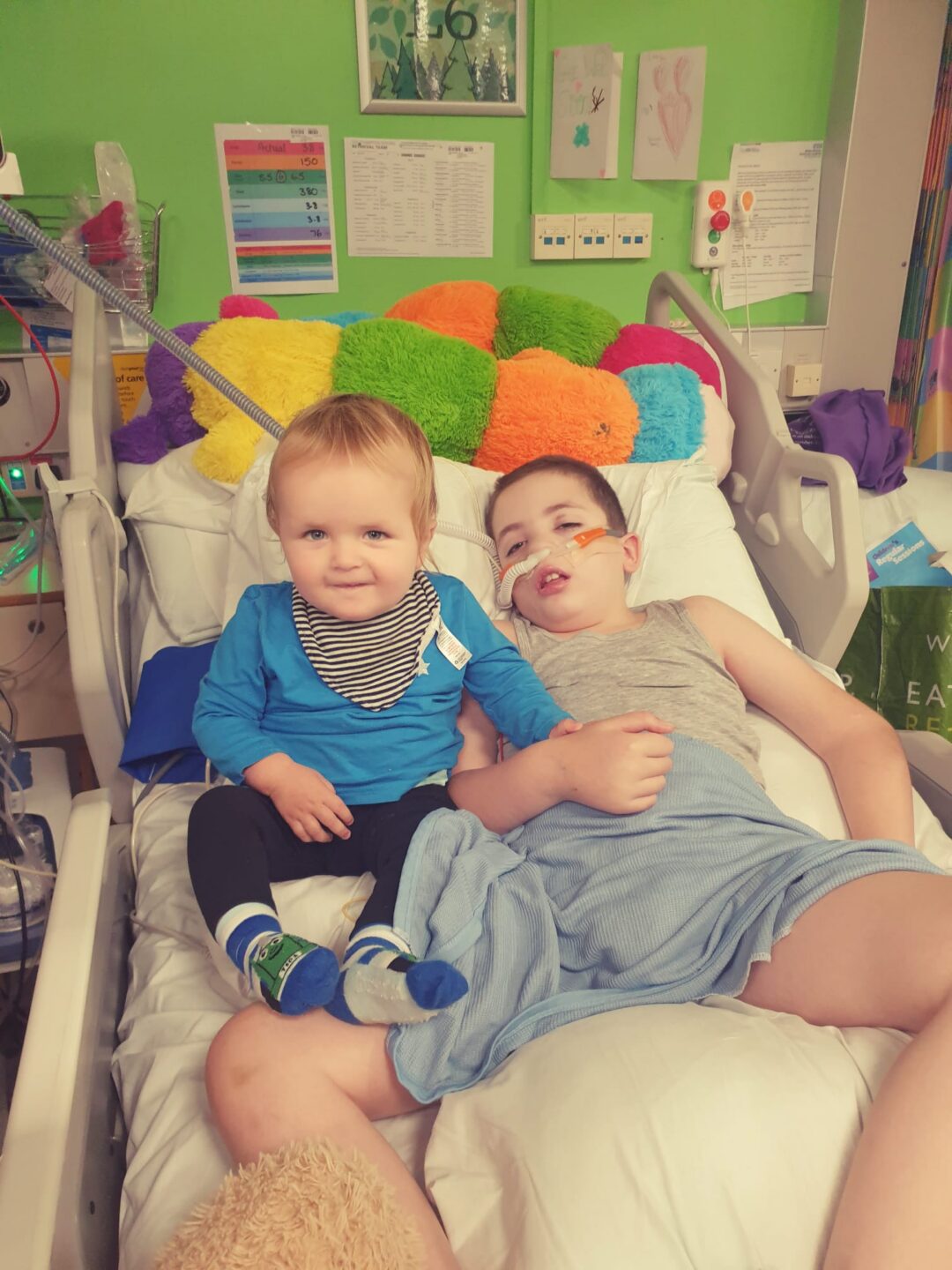
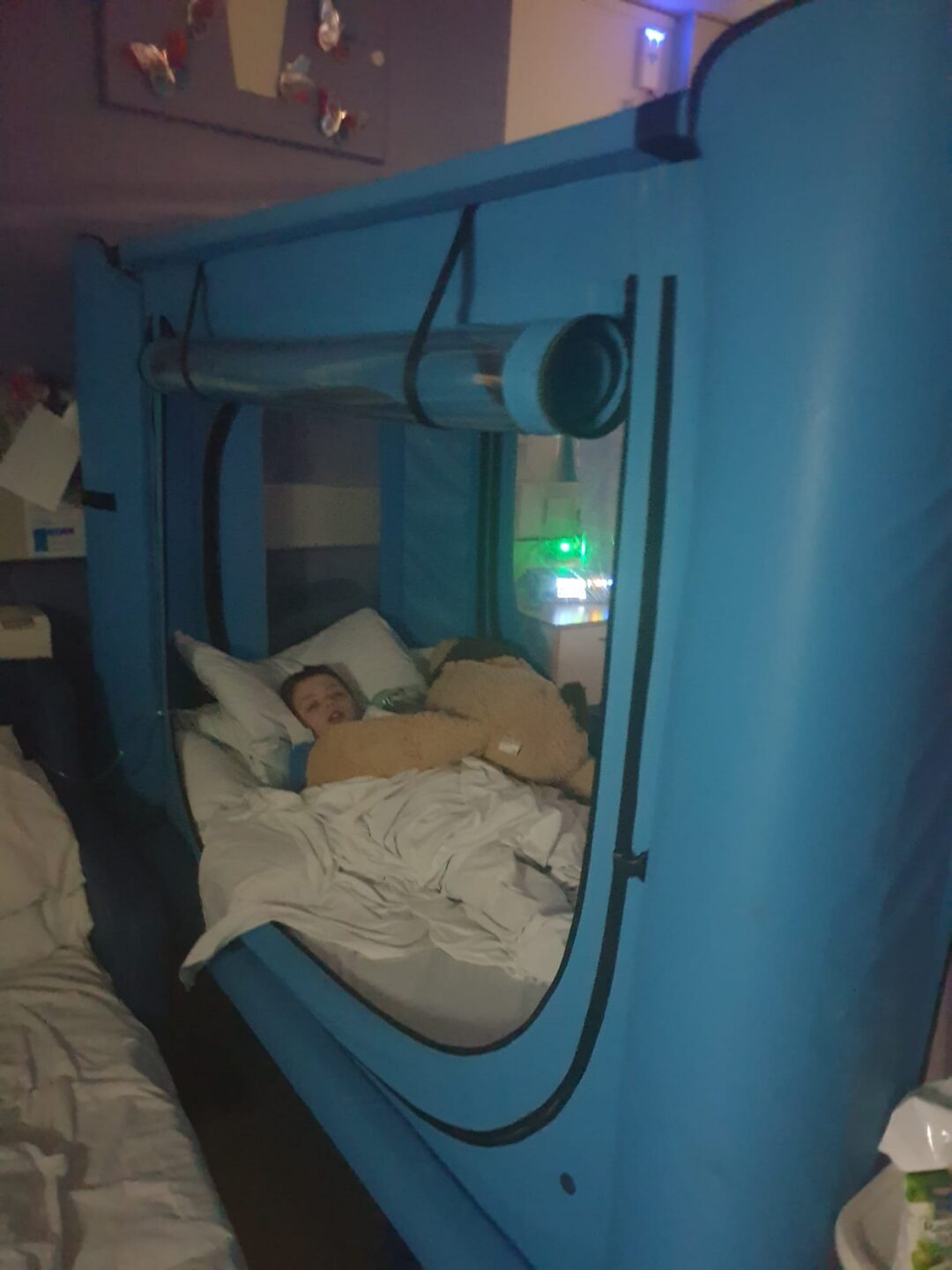
Six weeks later, we were back in hospital again as George’s seizures had become more and more frequent. Again, George caught something while we were there, so he was put onto an AIRVO and given oxygen and became bed-bound.
We managed 10 days at home in May, but the seizures were out of control, so we returned to hospital. George became unresponsive – it seemed like he was in a coma, but he wasn’t, and the doctors couldn’t figure it out.
My husband, Tim, had flu at the time and so I was alone with George in hospital. An EEG showed low brain function and I was told the next 72 hours were critical. I was so shocked that I couldn’t speak, so a doctor called Tim for me to let him know what was going on. Tim, wearing a mask and PPE, came to the hospital to give me and George a hug and then had to leave.
Hour 56, George opened his eyes. Hour 62, he looked directly at me. Hour 70, he gave a noise of acknowledgement and recognition, so we knew that his cognition was still there. Following weeks of physio, trying to build up muscle, George could stand and sit with support, but his mobility had gone – he could no longer walk.
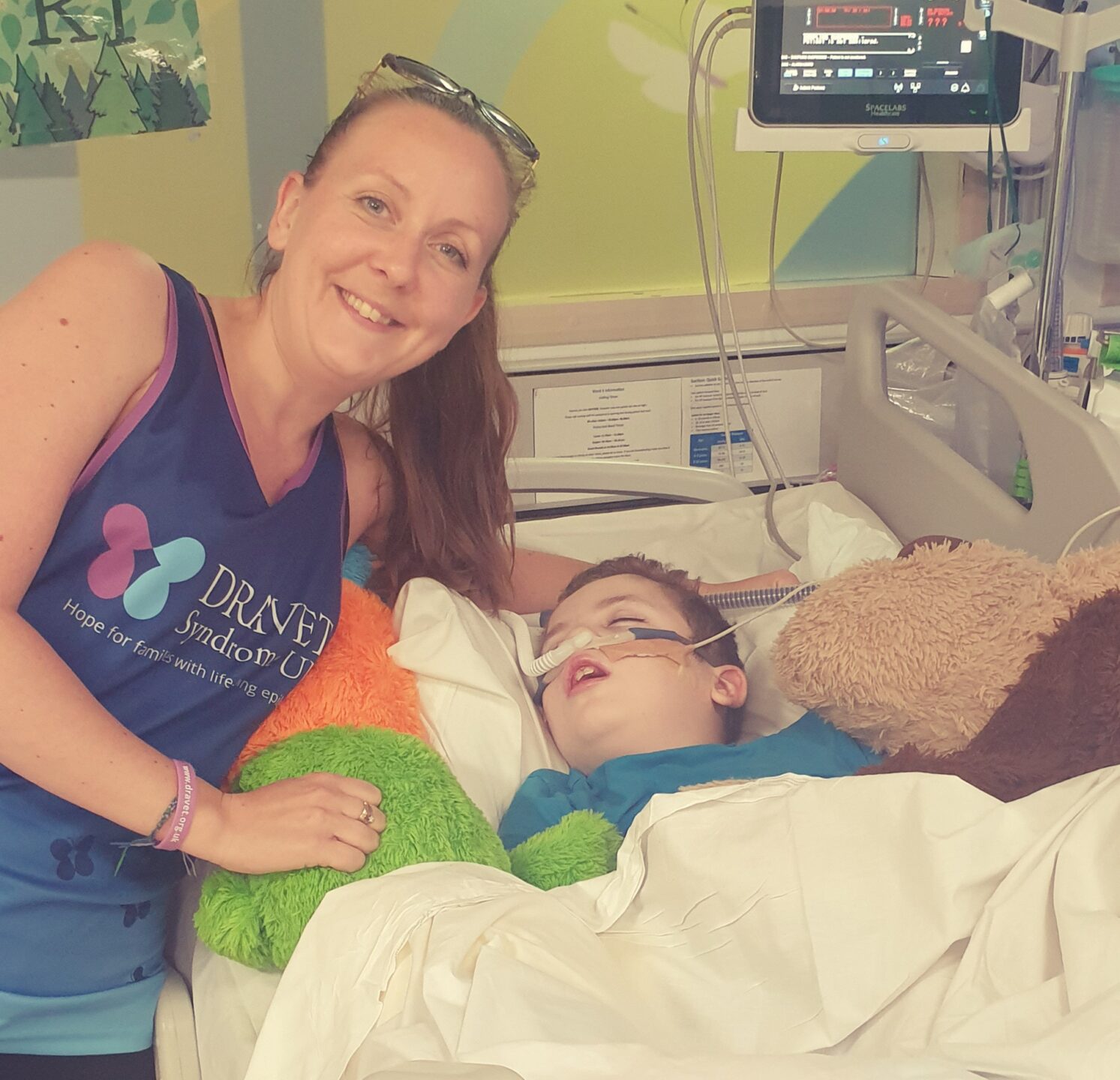
Apart from the 10 days in May, we’d spent a total of 14 weeks in hospital. Seizures were slightly better controlled, but since then, it’s been a pattern of two weeks in hospital, one week out, including a longer stay in November when George was intubated for 12 days (his fifth intubation) after catching a cold.
George is now Nasogastric (NG) fed, which is a nightmare as he doesn’t like anything on him. He has an unsafe swallow; silent aspiration. He has a very weak respiratory system and we’ve had to learn to do deep-suctioning at home.
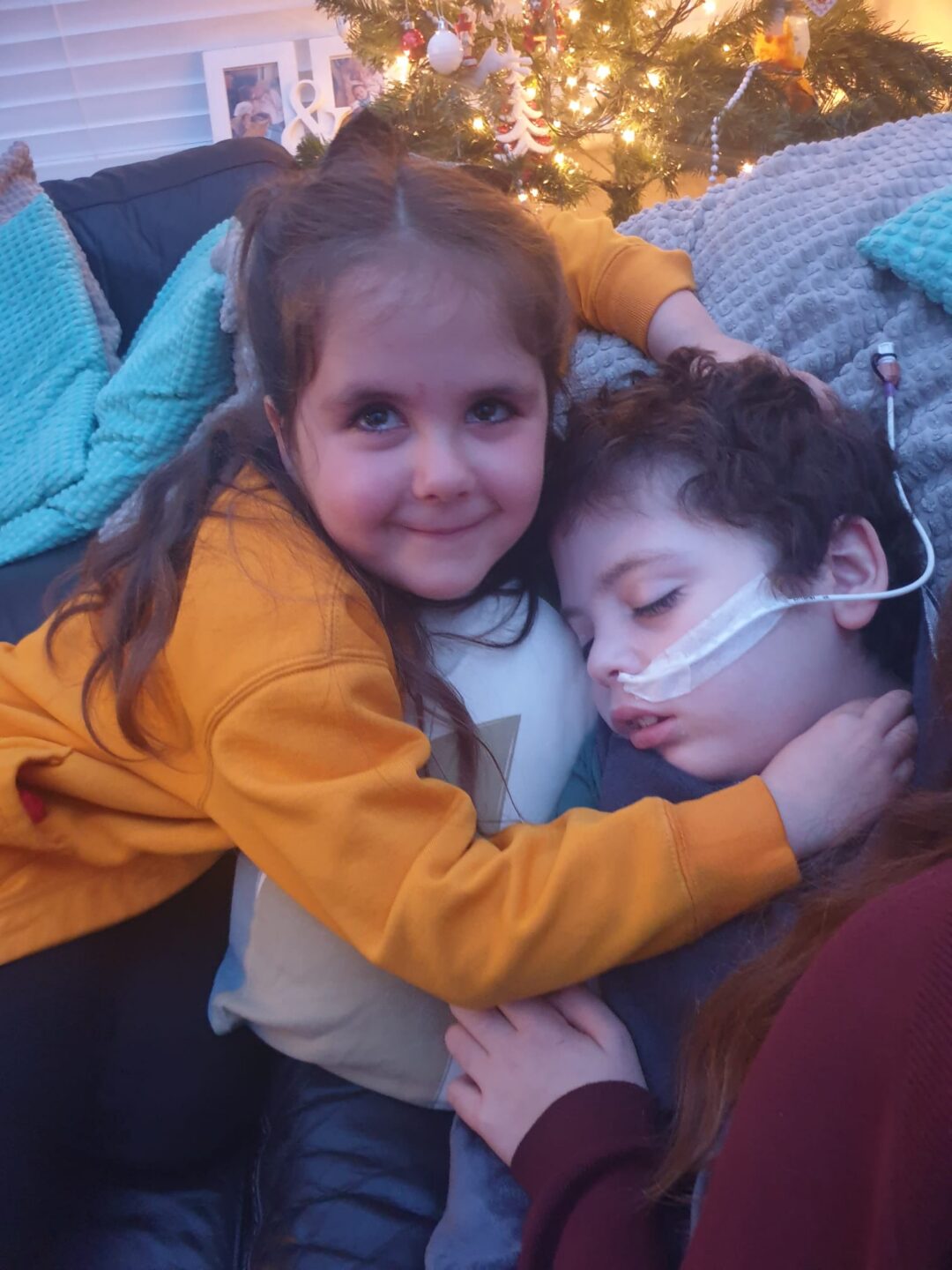
Thankfully, we were at home for Christmas day, which we owe to George’s sisters, Evelyn and Lillian. They’d been to visit Santa and when asked what they’d like for Christmas, they’d said for George to be at home for Christmas. I’ll never forget the worried look on Santa’s face!
In January this year, George caught COVID, so again we were in hospital for two weeks with him then. Recently, he’s successfully had an operation for a MIC KEY (gastrostomy) button. I’ve got some training to do, but hopefully I’ll adjust quickly.
Impact on the family
For the first two years of George’s life, we were only out of hospital for five months. The effect on the whole family was enormous, I missed out on a lot of my eldest daughter, Evelyn’s, life as I was always in hospital with George, and that was really hard.
Evelyn is now aged ten and copes well if I tell her what’s happening in an age-appropriate way. She has a good level of support, including counselling, from her school and from Keech Hospice too. Evelyn sometimes says things like ‘George won’t learn to drive’, so I try to focus on what he can do and how amazing those things are. Her bond with George is really special and so heart-warming.
Lillian, George’s younger sister, also has counselling at school and has an incredible teacher who supports her. I work with the school to ensure that if something is coming up, like George’s operation, the girls have received additional counselling and are prepared for what’s to come as best as possible.
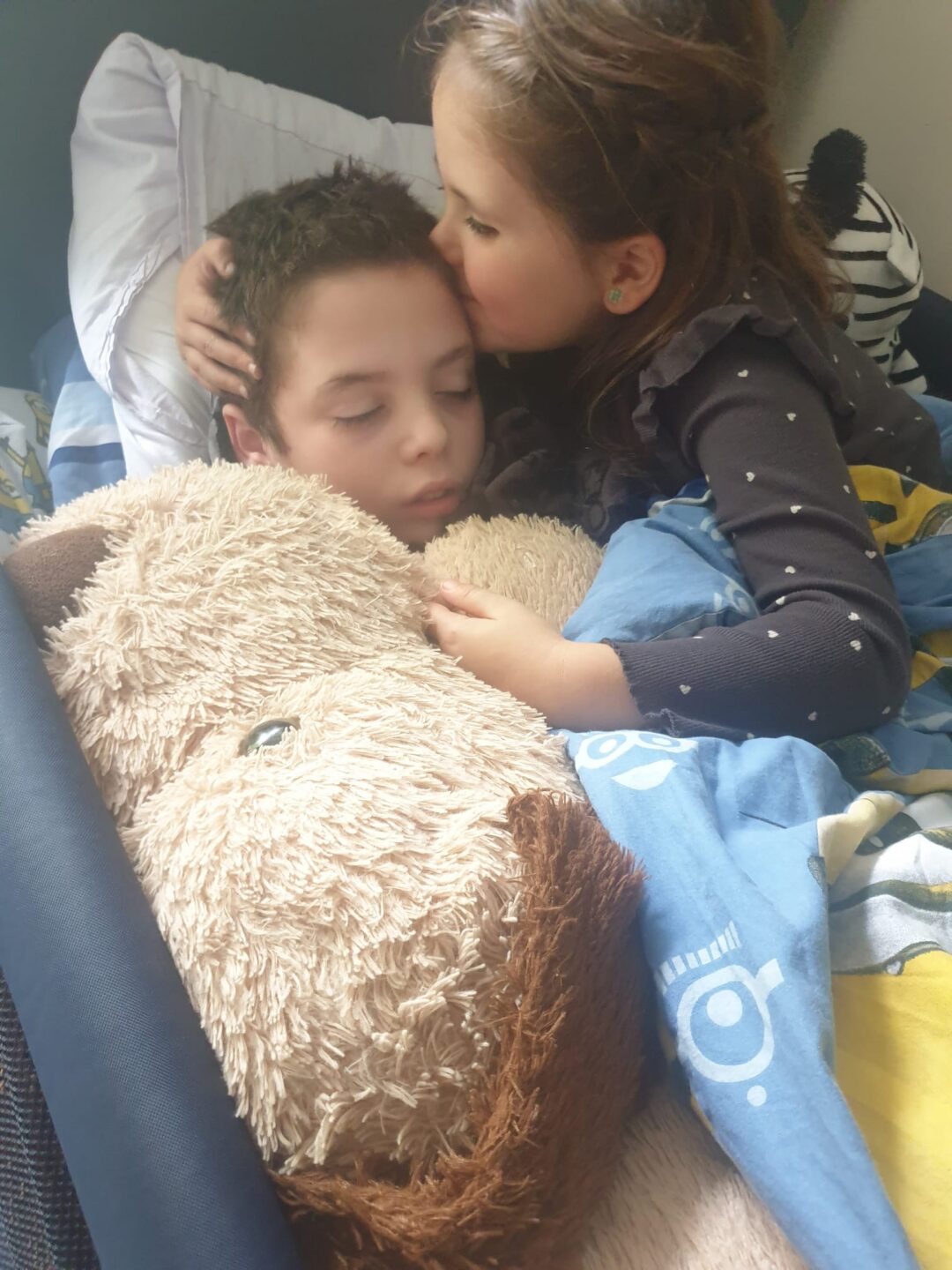
When George is lethargic and laying on his bed, the girls sit with him. They let him play with their hair and they all sing together, especially songs from The Greatest Showman.
Our youngest son, Billy, has recently turned two, so he is mainly oblivious to it all because of his age. He really loves George and he seeks him out. He tries to pull George’s NG tube out, which isn’t ideal, but they do really love each other.
I prepare things at home for George’s siblings for the inevitability that I’m not there. I’ve written all of the letters from the tooth fairy and stored them in a kitchen cupboard, so that if I’m in hospital with George when one of their teeth falls out, they’ll still receive a letter with the same handwriting as the first.
I think you can spot a sibling to a child or adult living with Dravet Syndrome – they are more empathetic, kinder and they don’t judge people’s differences. When they’ve heard their peers talk negatively about someone’s differences before, they’ve picked them up on it and encouraged them to be more inclusive.
As Tim and I have had to spend a lot of time tag-teaming it to the hospital, there are times when we just don’t see each other, which inevitably causes strain in our relationship. For our wedding anniversary last year, we drove to London (we couldn’t rely on public transport just in case we needed to get back to George), and watched the Lion King on stage. It was the first time in eight years we had spent an entire day together, just us, and I think it saved us as a couple. We now make a point of spending time together every evening, just being together for a chat.
We were both offered counselling from Keech Hospice. I have never had time to take this up, but Tim really values the support he receives from them and also at work. We’d encourage parent/carers to reach out for support and we hope another Dad or Mum caring for a child who is living with Dravet Syndrome sees this and feels that it’s ok to talk to someone.
Support from Dravet Syndrome UK
The monitor we received from Dravet Syndrome UK through the Seizure Monitor Fund has been invaluable. We use it all the time.
We’ve been to the Annual Family Weekend Away at Center Parcs and now look forward to it each year as four days of the year where we can just be us – we’re normal, we’re not being judged. There’s a real sense of community. I’ve stayed in contact with a small group of mums I met there and they’ve really helped me through, because they just ‘get it’.
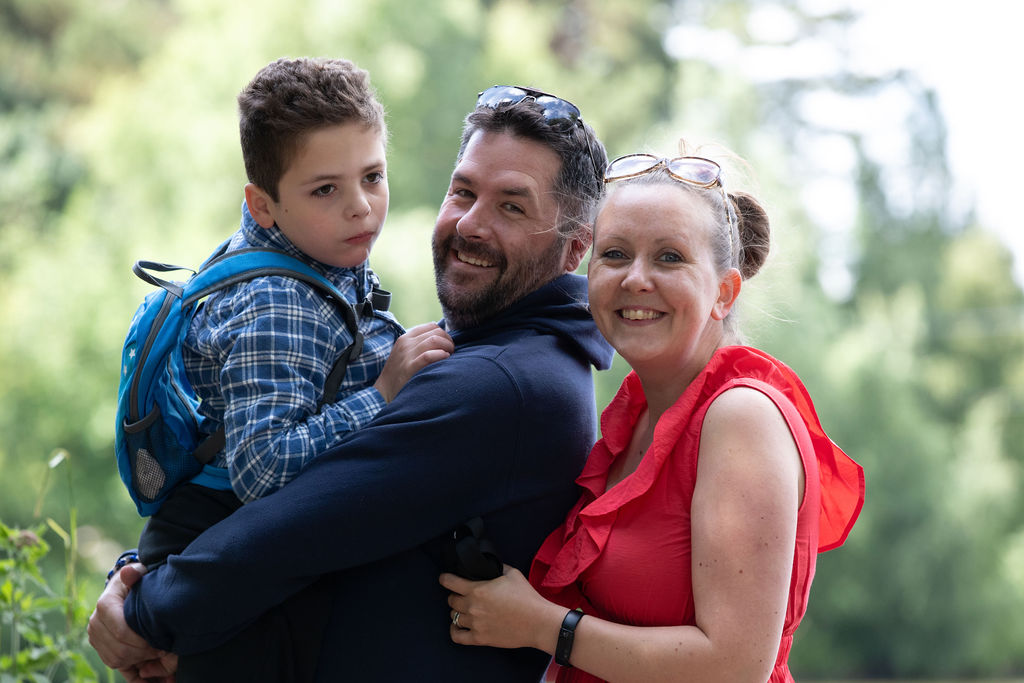
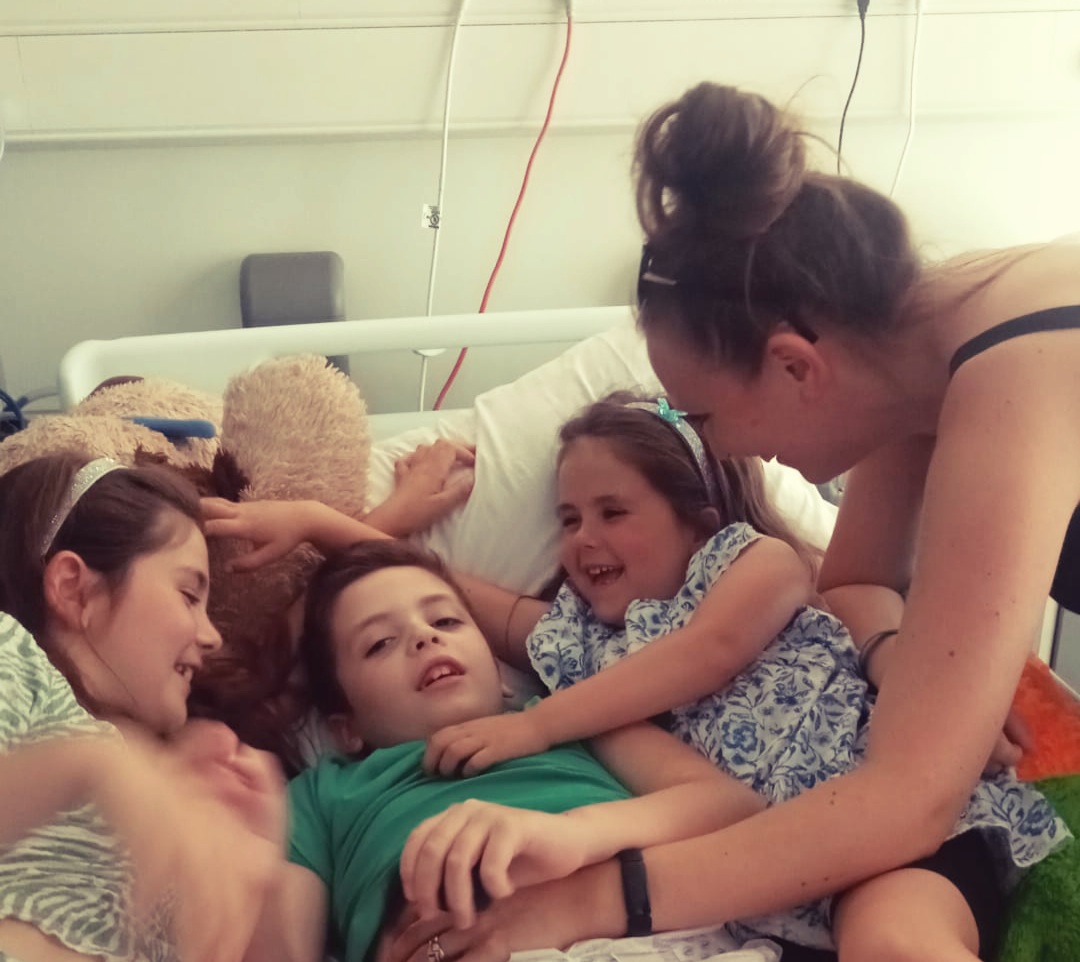
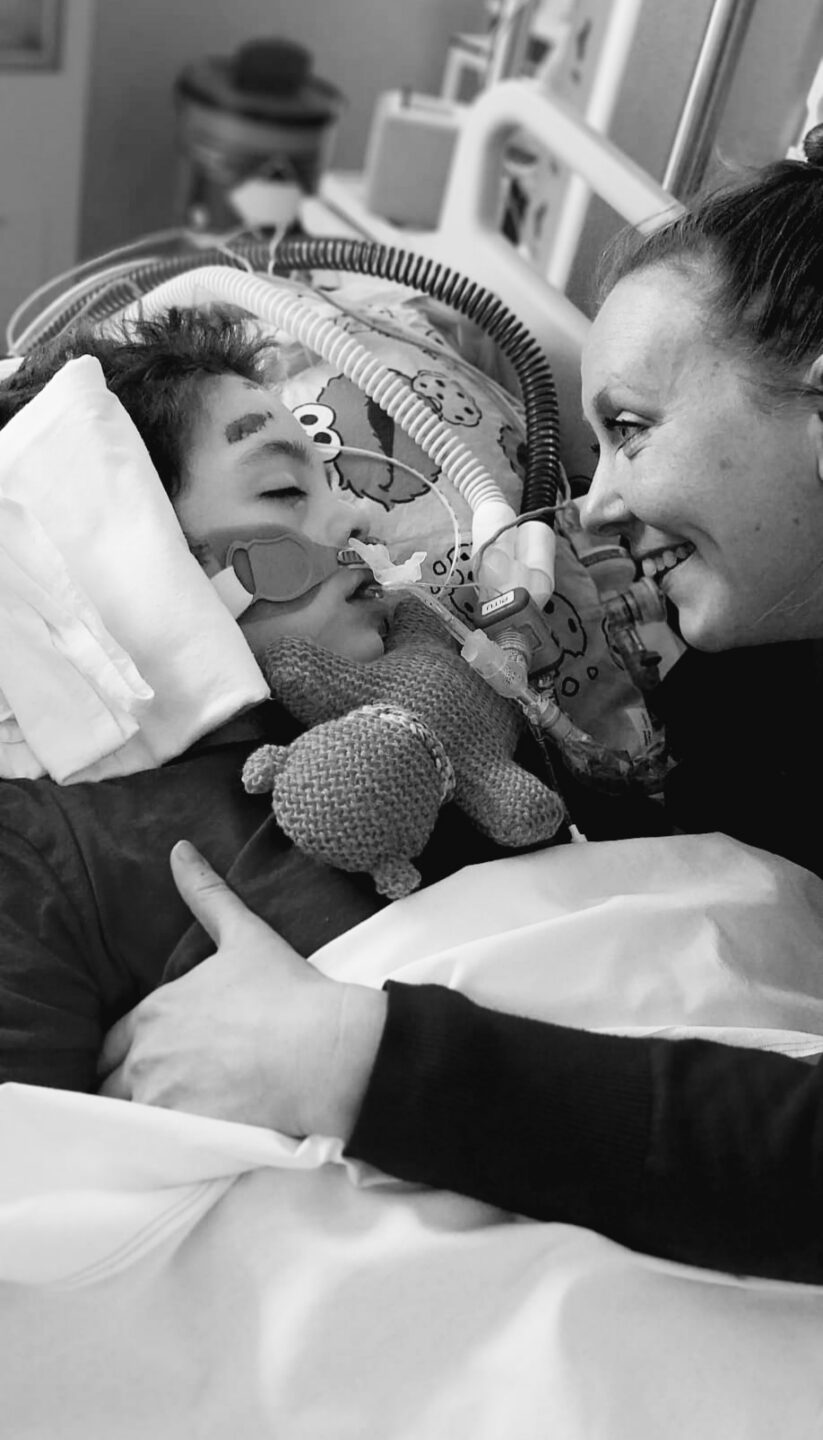
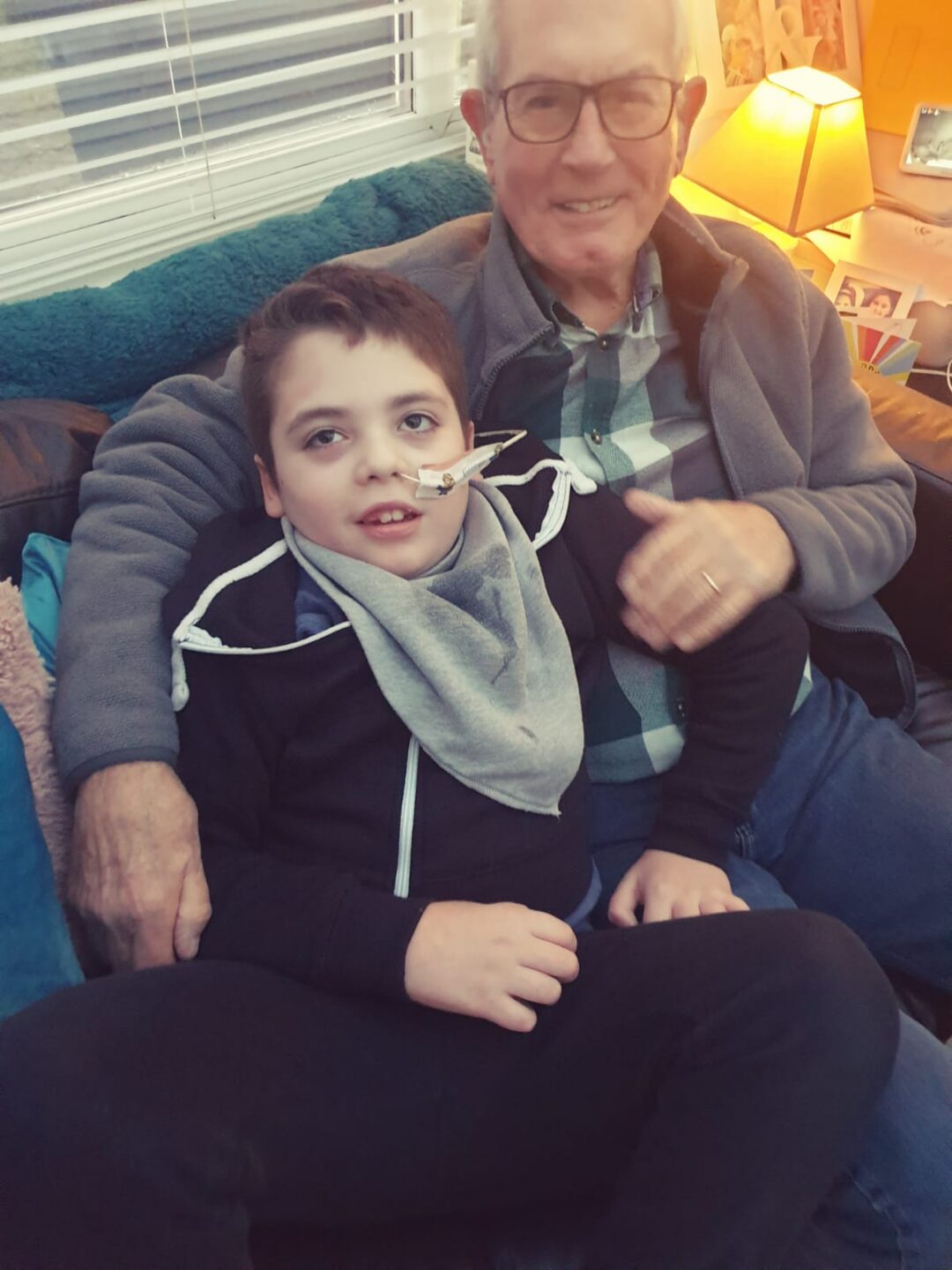
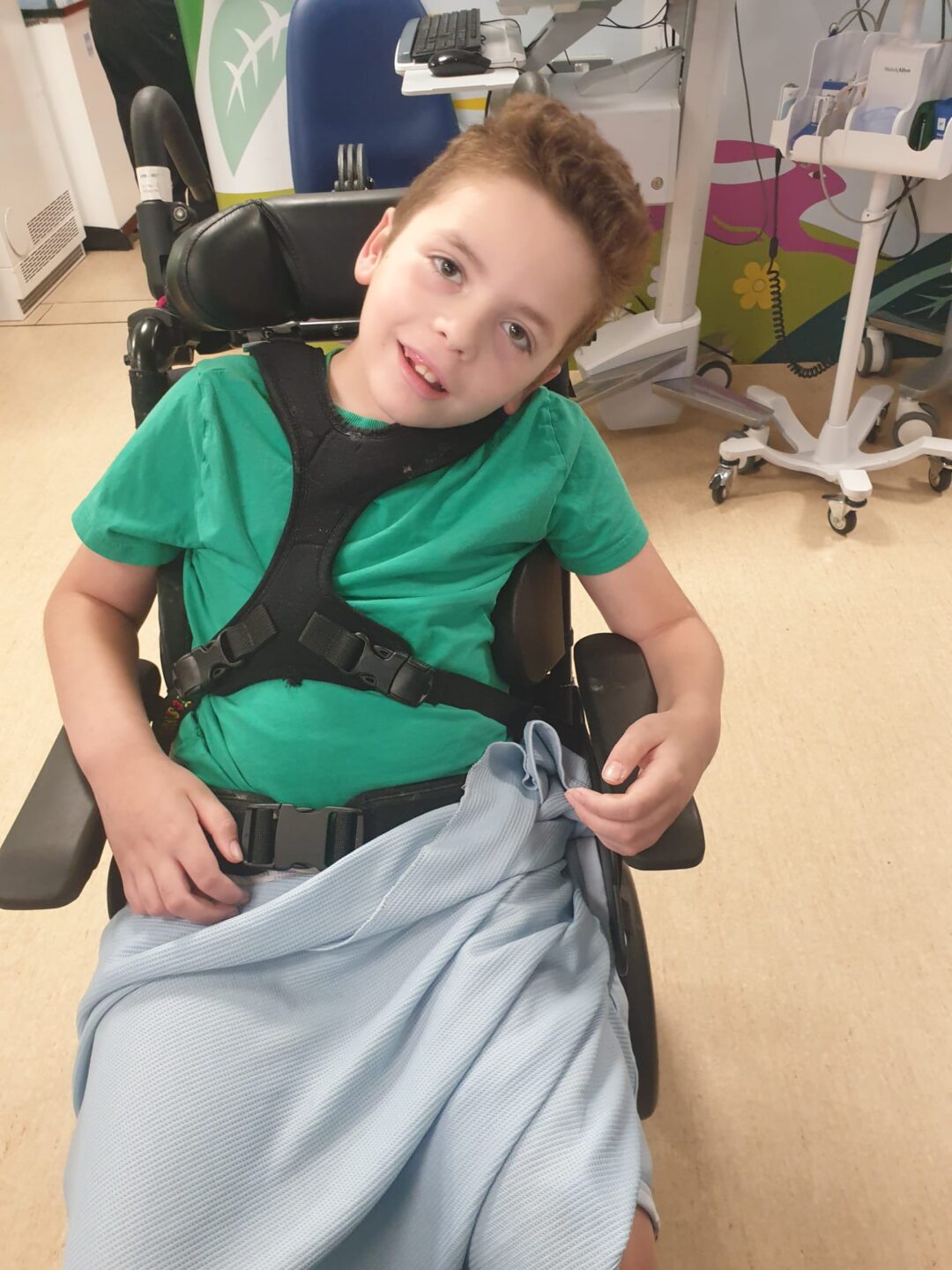
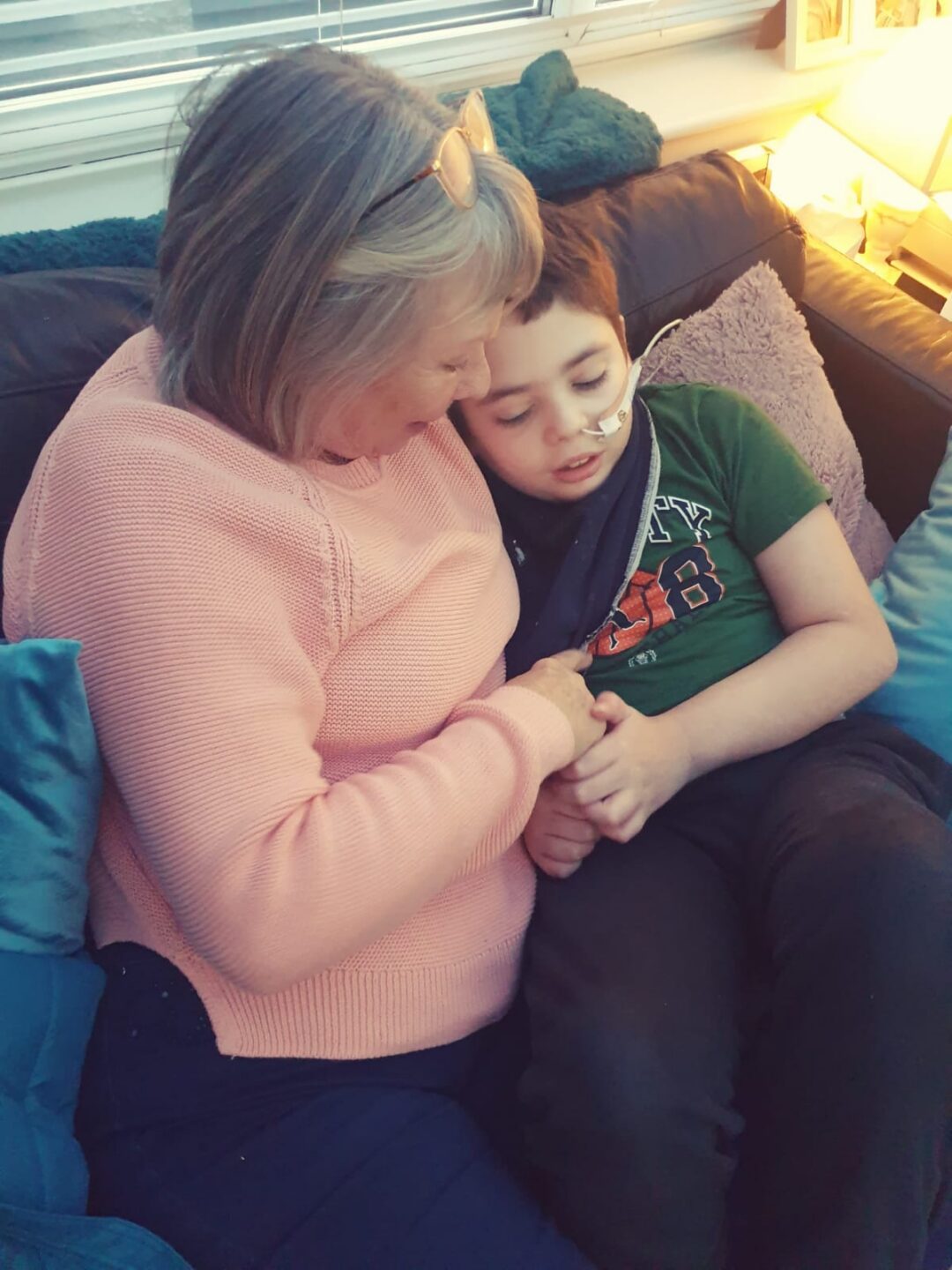
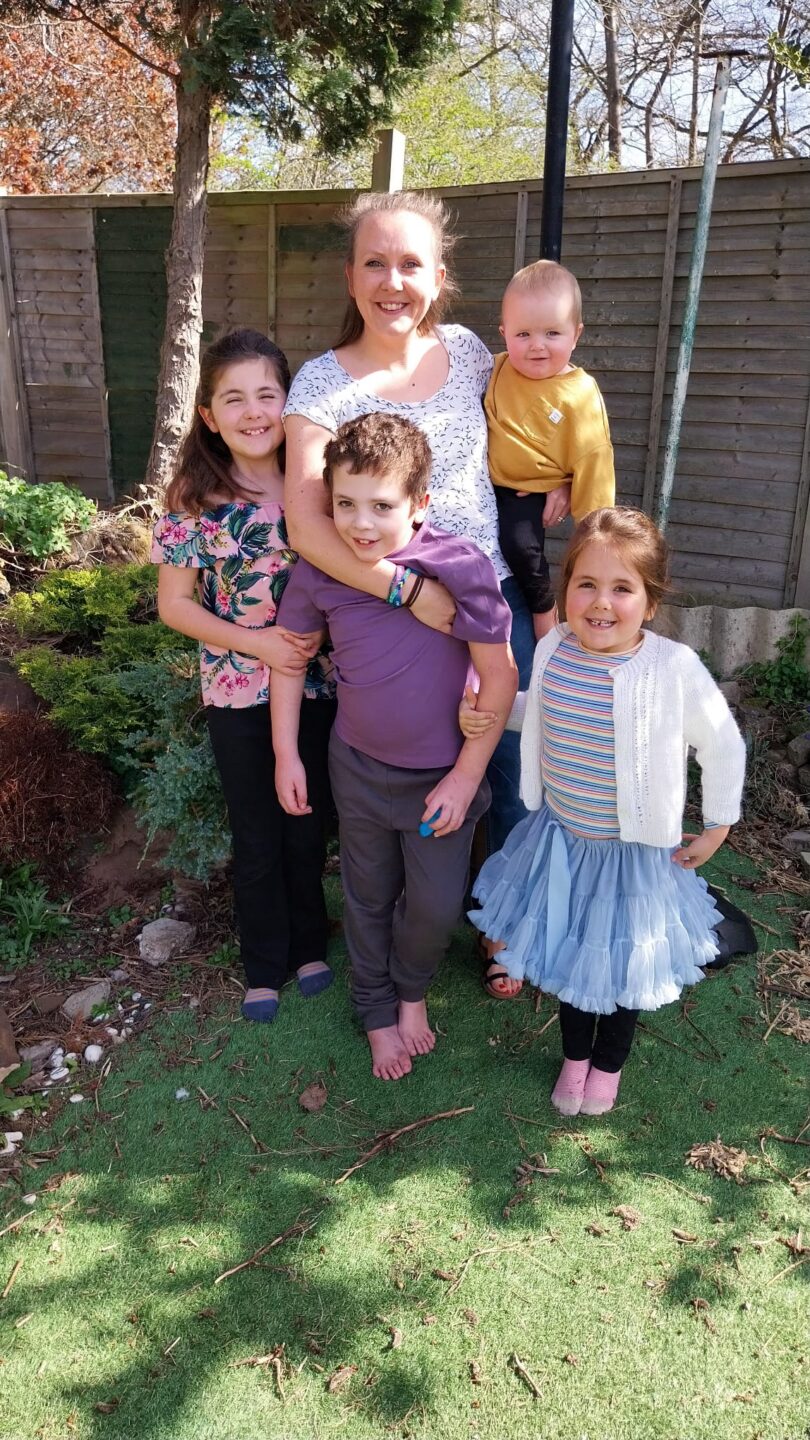
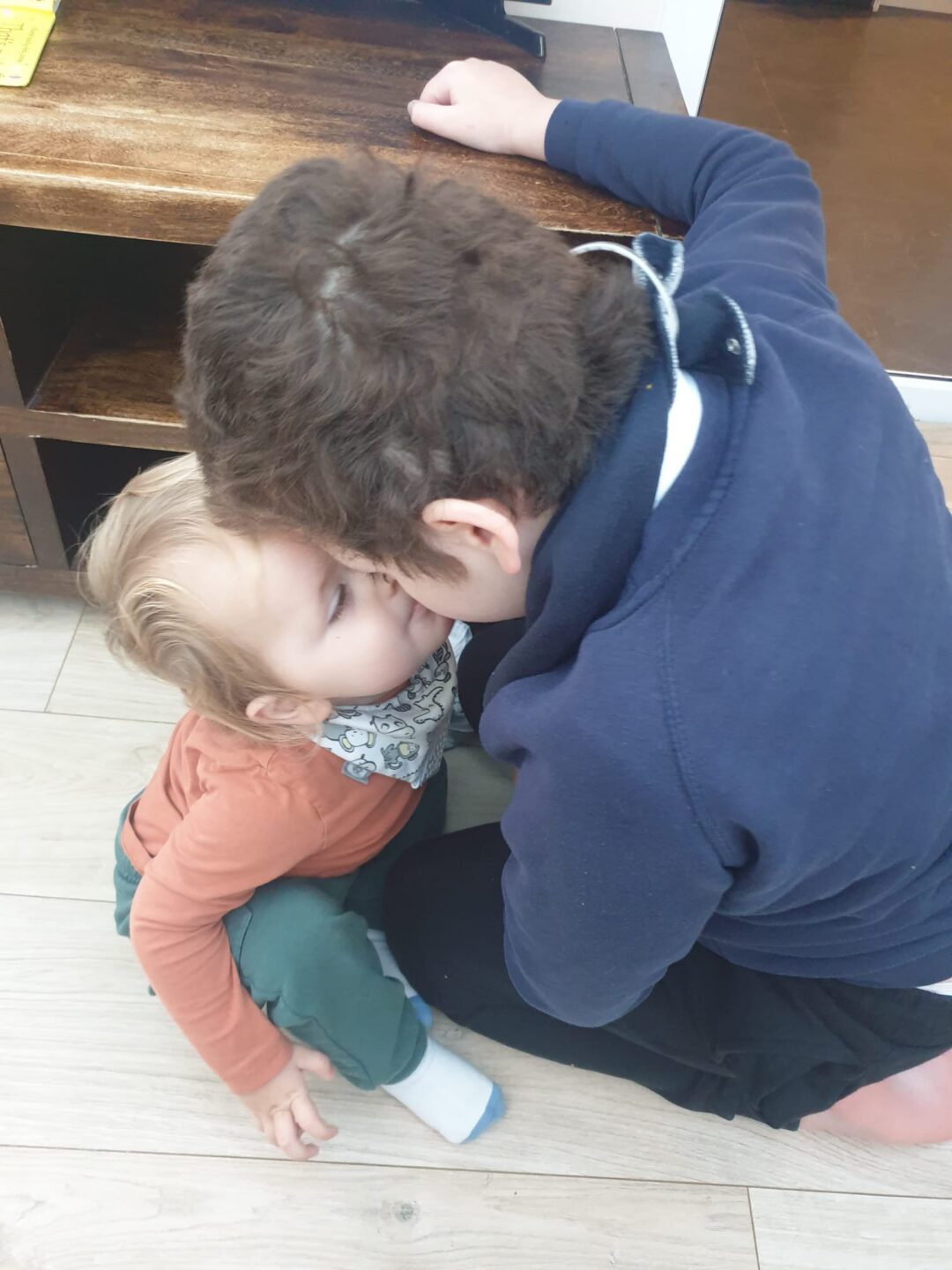
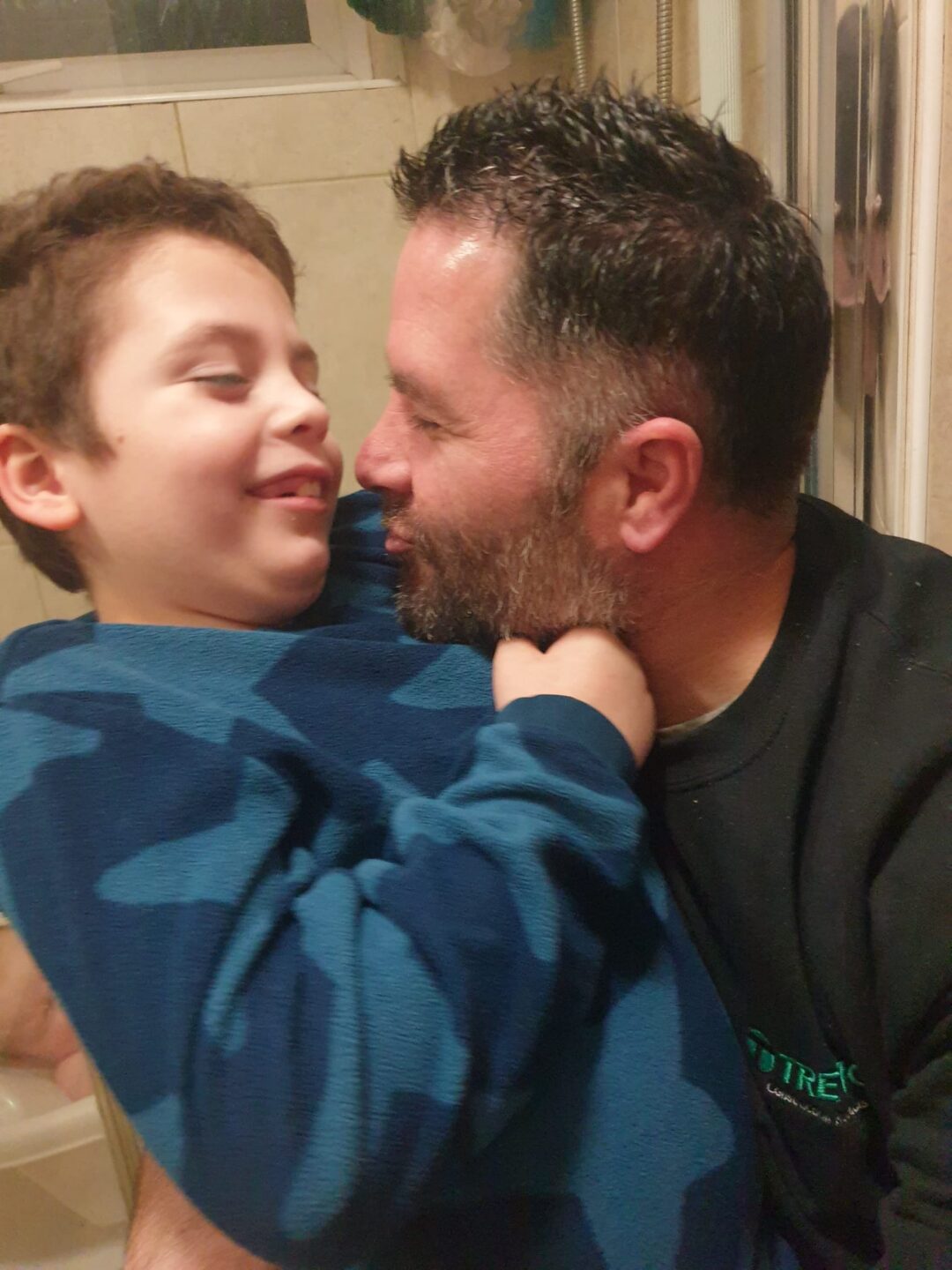
George is just lovely. He looks at you with so much love and happiness, it just melts you. Even after all he’s been through he radiates strength, beauty and joy.
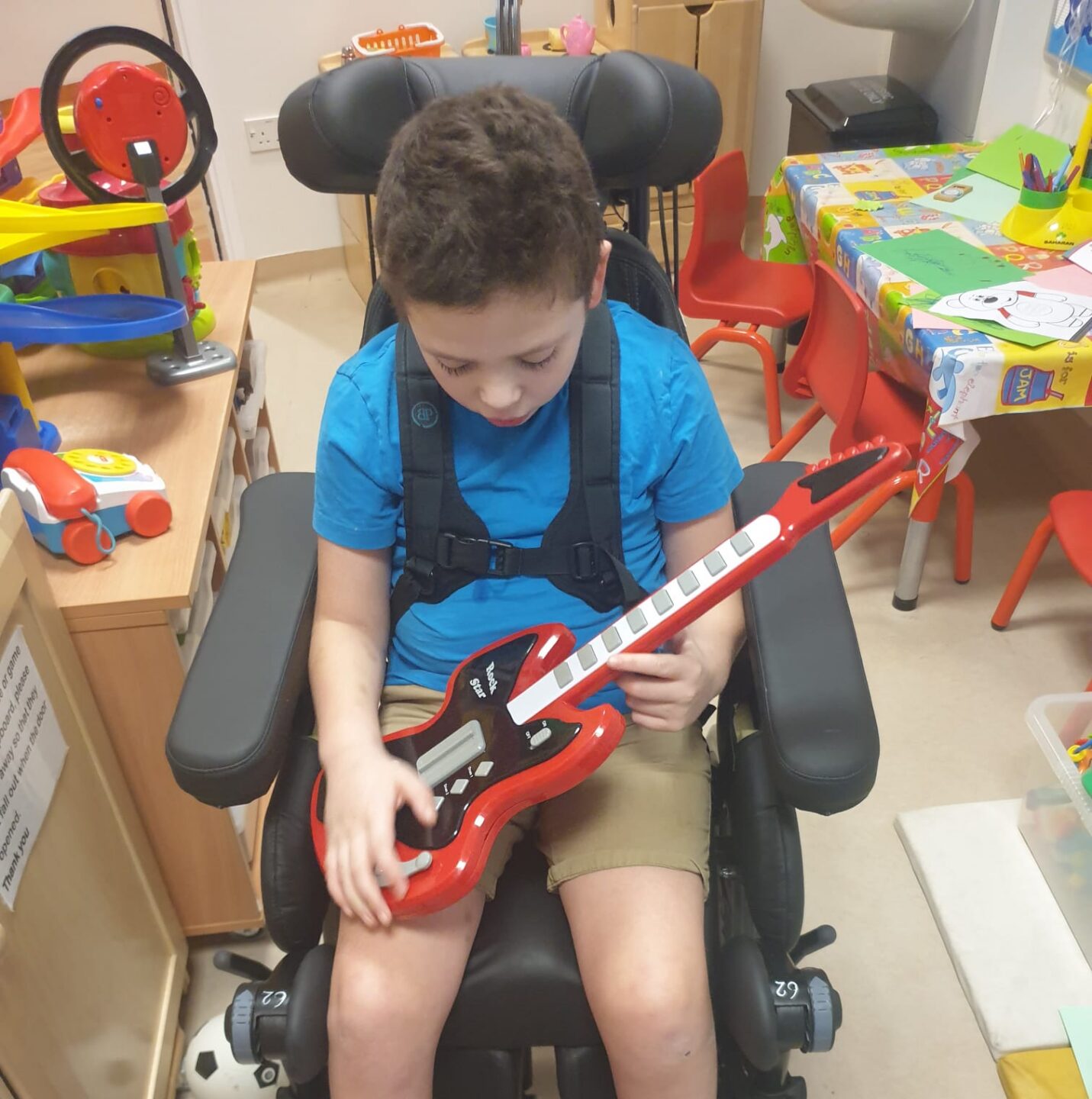
He adores music and has his own little dance moves. He loves being outside and is happiest in the middle of a bush, snapping sticks, or destroying flowerbeds.
George barely moans and doesn’t complain. When things are hard or it’s a tough day, we have a motto in our house; ‘I need to be a bit more George today.’
Every Dravet Syndrome journey is unique. Read more stories here.
We support all families affected by Dravet Syndrome. Read more here.
Discover more about Dravet Syndrome here.