
Awareness Month 2026
Mo’s family shared their journey for Dravet Syndrome Awareness Month 2026. For a review of the campaign, click here.
Mo had his first seizure at 6 months old. He lives with his Dad, Adam and his Mum, Samira, in Birmingham. Adam shares their story.

Mo’s first seizure was an experience I will never forget. It will always stay with me. He was 6 months old and I was just getting him changed. I’d put him down on the sofa to put his trousers on and then picked him up so he was on my chest, to pull his trousers up properly.
He started shaking against me. I was terrified and I didn’t know what to do. I quickly removed his trousers, just in case the trousers were, in some way, causing him discomfort and the shaking was a reaction to that. My automatic reaction was to then pull him towards me to keep him close – something that I now know was the wrong thing to do.
I hadn’t seen a seizure in ‘real life’ before, only on television. Me and my wife, Samira, didn’t know what was going on.
We rang 999 and the ambulance came and took us into hospital. We were told that the seizure was a febrile convulsion, which was considered ‘normal’, and we were sent home.
Gaining a diagnosis
From then on, there wasn’t a week that went by where we didn’t visit the hospital. Mo was averaging around 3 seizures a week. It became obvious very quickly that there was something else going on. By this point, Mo had been given anti-epilepsy medications, one of which, we found out later, makes seizures in those living with Dravet Syndrome worse.
I started to question everything and we blamed ourselves as parents. ‘What am I doing wrong?’, ‘Why is this happening to us?’, ‘Why is this happening to our child?’.
About 6 months after Mo’s first seizure, I was out on my own with him, shopping in Birmingham. Suddenly, in the middle of the city centre, Mo had another seizure. Though I was now more aware and knew what to do, the experience was overwhelming. I quickly called an ambulance. The seizure lasted for an hour.
In hospital, I sat in a corner of the room while Mo was having repeated seizures. The doctors and nurses were surrounding him. I vividly remember the feeling of dread, waiting for one of them to turn to me to say that we had lost our son. Eventually, they were able to stabilise him and he started to recover.
The second morning we were there, I went to get a coffee. There was another Dad there, chatting with others. I got talking to him. He explained that his daughter was bedridden; she would never walk or talk and was very ill. While I was talking to him, Mo came running over to me. Despite everything that had happened in the past couple of days, I suddenly felt extremely lucky.
At this point, my mindset completely changed. One of my mantras now is that there is always someone worse off than you. It helps me to focus on the positives and be there for Mo as best as I can.
We were very persistent in pushing the doctors to find out what was going on. The neurologist said he was going to do a genetic test, not because he thought Mo had a genetic condition, but just to rule it out. We received the result around 3 months later, which confirmed Dravet Syndrome.
While we definitely never wanted this for our son, having a diagnosis meant we had a direction. The neurologist changed him onto more appropriate medication and I started researching and educating myself about Dravet Syndrome.
Daily challenges
We have sadly found that most paramedics have never heard of Dravet Syndrome, which makes ambulance trips even more stressful. Because of this, I have created a crib sheet, which I’ve laminated and now, rather than explaining each time, I give this sheet to the paramedic or healthcare professional so they know a little bit more about Mo’s condition immediately.
Living with Dravet Syndrome has meant that Mo hasn’t had a ‘typical’ childhood. A lot of the things that others take for granted haven’t been possible. For example, the way sunlight moves across the grass could trigger seizures, so we’ve never been able to spend much time outdoors or at playgrounds with him.
Mo has always attended a SEN school, which he loves. We have some peace of mind knowing that there are staff there who can support him during a seizure, until we can get to him.
Juggling life is always tricky. I work full-time but Sam has had to reduce her working hours to ensure she’s around for Mo. We recognised early on that caring for a child with complex care needs is extremely difficult and puts a huge amount of strain on parental relationships. We are fortunate to have a large family surrounding us and we each have at least one break on our own, visiting family or away, once a year. We want Mo’s world to be happy and so prioritise where we can, to focus some time on our ourselves.
Mo will become a teenager in just a few months and it is now that I feel the gap between him and his peers has really opened up. He has the mental age of around a 4 or 5-year-old. Though this is difficult for us, Mo is none the wiser and other children, like his cousins of a similar age have now started to ‘look after’ him when they play.
Mo’s older brother, Malik, is eight years older than Mo. We have shielded Malik where we can, but inevitably he has unfortunately missed out on things, for example our annual ‘adventure’ holidays that we used to go on before Mo became poorly. He is very understanding and has always been mature about things. Now Malik has moved away from home to complete his apprenticeship, he calls us to check in; not on how me or his mum are doing, but how Mo is doing. They love each other very much and have a lovely relationship.
We try to remain positive and give Mo as much of a ‘normal’ life as we possibly can. We focus on today. Whatever tomorrow brings, we will deal with it then.
Support from Dravet Syndrome UK
Dravet Syndrome UK’s website has been extremely useful. In the early days, when Mo was first diagnosed, it was so useful in helping us to understand the condition. Now, it’s a great resource to keep us up to date with new research and developments. It means that when I speak with Mo’s healthcare team, I’m already aware of current advances in treatments, trials and medications.
The website has been so useful to me because one of the things I’d advise to other parents is to educate yourselves when it comes to Dravet Syndrome. You are the expert when it comes to your child and of course, not every medication will work for them, but gaining knowledge and doing the research means that you can really work with the healthcare professionals to get what’s best for your child.
The Dravet Syndrome UK parent/carer conferences and attending the Annual Family Weekend at Center Parcs in the past have been eye-opening experiences. I always learn something new when I speak to other parents.


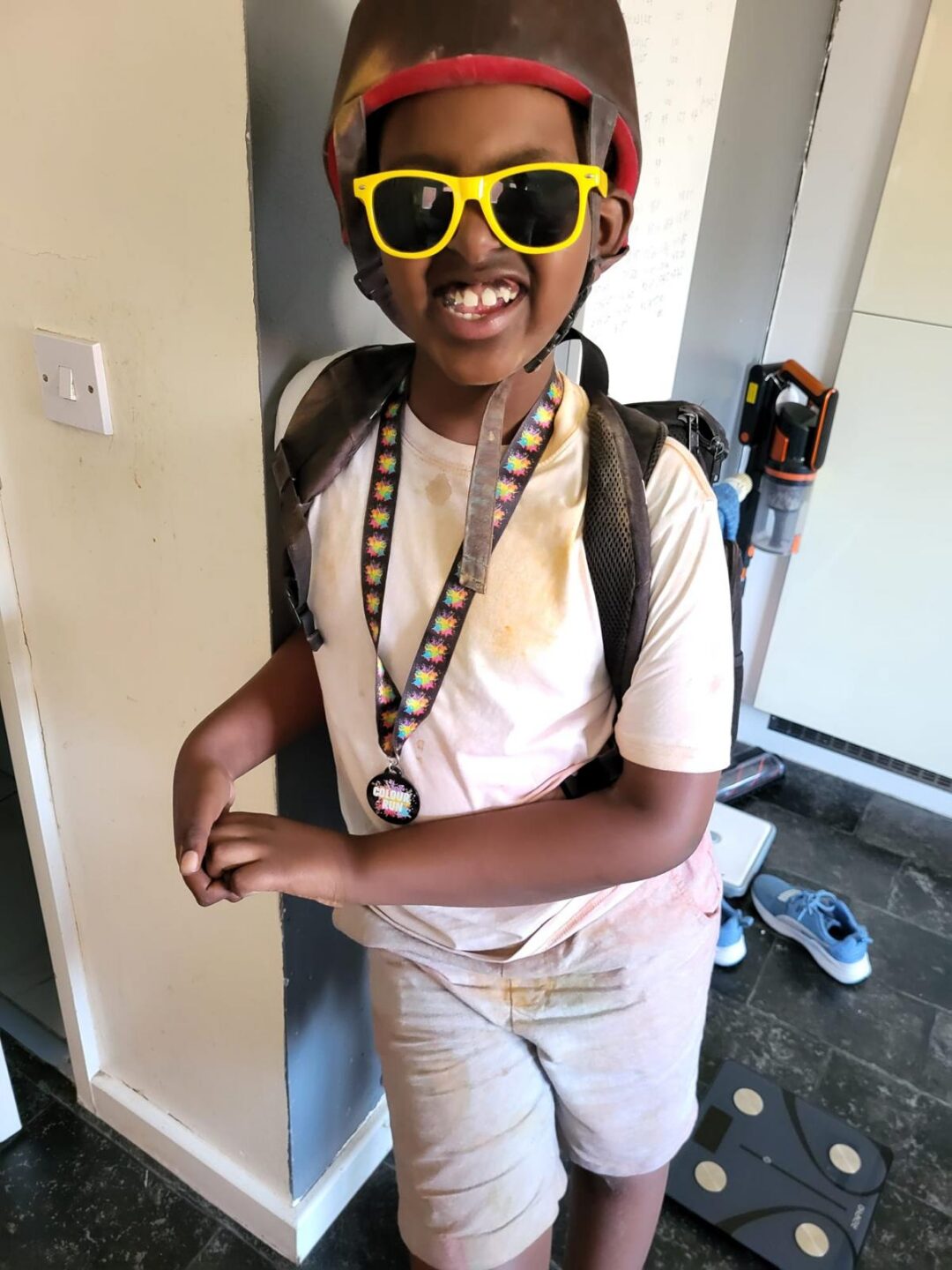
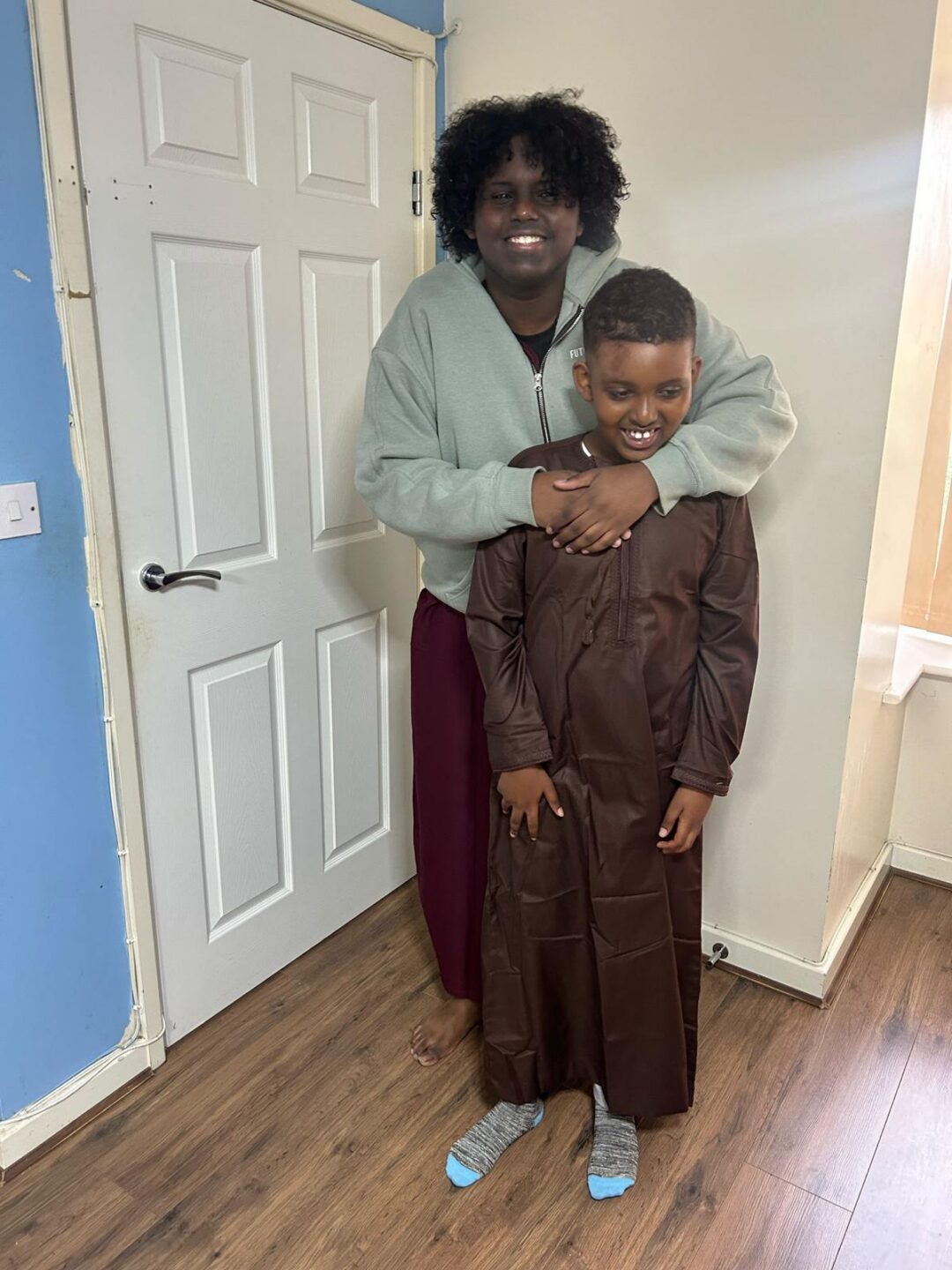

Mo likes to repeat phrases from the TV. I’ll never know what attracts him to phrases, but over and over he says things that he’s heard. He has recently started to play PlayStation, which is encouraging him to sit for more than just a few minutes and really focus on something.
Last year, after months of planning, we took Mo to Morocco for his first holiday abroad. He wasn’t too fussed on the holiday as a whole, but absolutely loved breakfast, lunch and dinner times as he could choose exactly what he wanted from the restaurant buffet!
Mo surprises me in many ways – he is very good at reading body language and facial expressions. He’ll chip into a conversation at the ‘right’ time using words that you don’t think he knows. It’s out of the blue and makes me smile.
Honestly, Mo has been nothing short of a gift to us. As difficult as this journey has been at times, he has changed my life in ways I never expected and for the better. He has taught me to slow down and appreciate the small, positive moments that I would have once overlooked. The simple things now mean everything. A smile, a laugh, a quiet moment, they all carry so much more weight because of him.
He has made me a more empathetic person. I find myself more understanding, more patient and more aware of what others might be going through. He’s changed how I see people and the world around me. I truly believe I am a better man and a better father, because of Mo. I wouldn’t want life any other way.
What stands out most is his happiness. Mo manages to make me smile every single day. Despite everything he faces, he is one of the happiest children I have ever known. There is a purity and strength in that which is hard to put into words. Because of him, I try to see the world through his eyes with more joy, fewer worries, and less focus on the negatives. He reminds me daily of what really matters.
Despite all that he goes through, I can count on two hands the amount of times Mo has properly cried in his whole life. He is a very happy child and we are so proud of him.
Mo’s family shared their journey for Dravet Syndrome Awareness Month 2026. For a review of the campaign, click here.
We support all families affected by Dravet Syndrome. Read more here.
Find out more about Dravet Syndrome here.