
Awareness Month 2026
Robbie’s family shared their journey for Dravet Syndrome Awareness Month 2026. For a review of the campaign, click here.
Robbie, now aged 41, had his first seizure at five months old. He lives with his Mum, Fiona and Dad, Graham in Fife. Fiona shares their story.
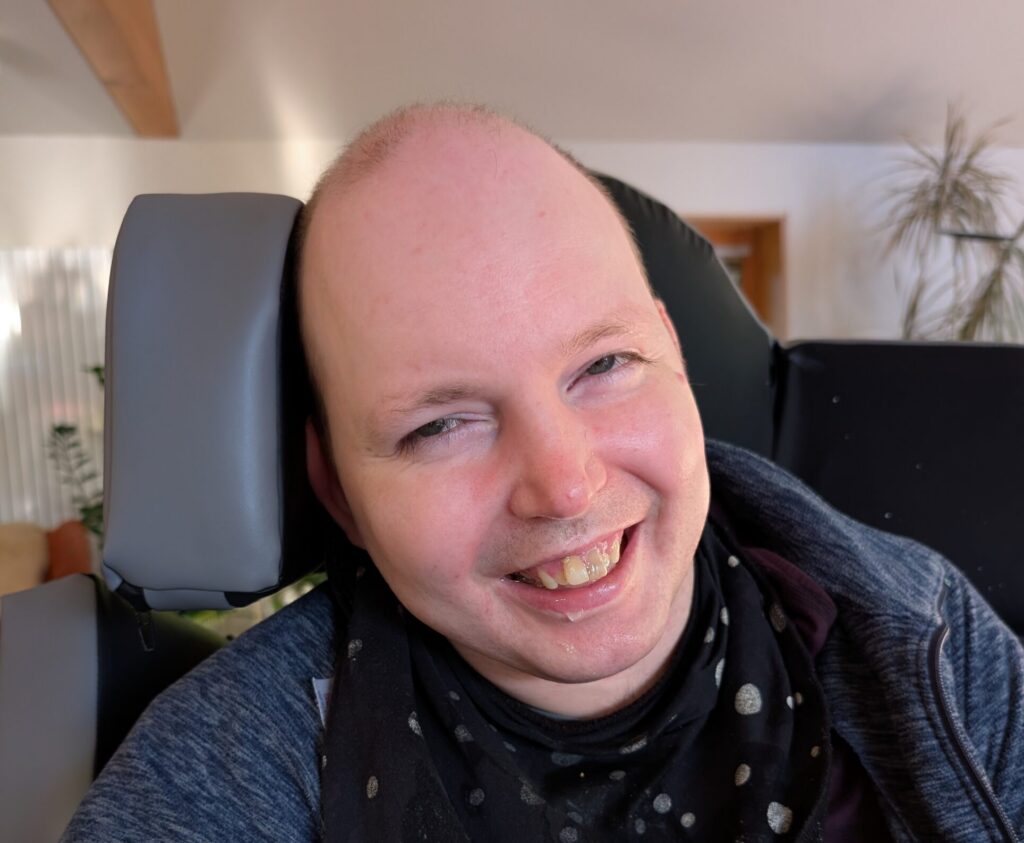
Robbie was born in May 1985, and is the youngest of our three children. He had his first seizure at five months old.
We had taken him to the local swimming pool for the first time with our two older children. The seizure lasted 2 minutes. I recognised it as a seizure, having worked with young adults with special needs, but it was still a shock. He was admitted to hospital but had no other seizures during our stay there.
Over the next few weeks and months though, Robbie experienced further seizures of varying types with status epilepticus becoming more common. We heard many doctors say “I’ve never seen anything like this before”.
Gaining a diagnosis
When Robbie was a year old, we sought a second opinion and took him to Great Ormond Street Hospital, London. No diagnosis was given. At the age of 5, we sought a third opinion and were sent to Yorkhill Children’s Hospital in Glasgow. Again, no answers, but the consultant neurologist, Professor John Stephenson, told us that the origin of his condition was likely genetic – so we were getting closer.
In 2005, when Robbie was aged 20, our daughter Leigh and her husband Stephen sought genetic counselling as they considered starting a family. As a result, I took Robbie to see a genetic consultant at Ninewells, Dundee. Six months later, we received a letter stating that a truncating mutation had been found in Robbie’s SCN1A gene.
Robbie was 21 years old when we finally learned his condition was known as Dravet Syndrome. We were relieved to finally have an answer to our son’s complex and challenging condition, but we were not given any information or support. The very limited information about Dravet Syndrome on the internet at that time was all related to children and so wasn’t particularly useful to us.
Graham and I were subsequently tested and received negative results, so Robbie’s mutation was described as ‘de novo’.
Challenges of life as an adult living with Dravet Syndrome
Robbie stopped having status epilepticus episodes at around 5 years old. His seizure pattern has changed many times over the years. In his teenage years he sometimes had clusters of five or six tonic clonic seizures and then might have a few weeks of less seizure activity. After a cluster of seizures he’s much more likely to have non-convulsive episodes and was admitted to hospital twice for non-convulsive status epilepticus. He’s had gelastic seizures (uncontrolled laughing) and once had a dacrystic seizure (crying) which was horrible.
Robbie was a pupil at Camphill Schools (specialist schools and communities for those living with learning disabilities) until age 18. Finding a suitable follow-on from that was very testing. The greater the disability, it seemed, the more difficult it was to find anything.
He attended a day centre in Fife until the age of 35, when he was suddenly suspended from attending without any notice. The suspension happened on the same day that an inspection report by The Care Inspectorate was received, which said that the service couldn’t meet his needs safely in the building. This was a terrible time for us and we were left with no service whatsoever. I contacted the Care Inspectorate as a result and their Inspector said that he would insert a recommendation in all future reports for a handover period to ensure no-one else was treated in this way.
Following this, carers began coming to our house to take him out. Now we have two carers on six mornings a week.
We've been very fortunate to have a relatively stable set of carers, one of whom has been with us for twenty-four years! We are very grateful for this level of support; it gives us some free time, which enables us to cope in the longer term.
In recent years, things have become particularly difficult. In 2012, it became apparent that Robbie could no longer safely go upstairs. We converted a downstairs sitting room into his bedroom and were fortunate to have a toilet on the ground floor but installing a shower wasn’t possible. In 2018, we moved into our new self-build house which was designed to meet all of his needs and we now make full use of his large wet-room, wide doorways, threshold-free flooring and wheelchair-accessible entrances. Thinking ahead has worked for us and it’s a bonus that Graham and I are now sorted for our own old age!
Robbie now has about 8 tonic clonics per month and lots of absence seizures in between. His life is greatly affected by his severe postural issues and this has as much of an impact, if not more, than the seizures. He struggles to hold his head up, so he spends a lot of time in bed where he can be best supported. Sadly, 2 years ago he lost the ability to walk or bear weight, became doubly incontinent and always requires hoisting.
Robbie is now registered with the Fife Palliative Care Team – his consultant neurologist proposed that we should become known to them as it would not be in Robbie’s best interest to admit him to hospital, if it can be avoided. This doesn’t mean that the end of his life is imminent, but it means that Robbie will receive care at home, when required, which will hopefully maximise his quality of life. We have lots of specialised equipment at home which couldn’t be replicated quickly elsewhere. We feel this is a positive step. We’re contacted regularly by the district nurse-led team and know that help will come to Robbie when required.
One of our concerns now is maintaining our own health (we are 69 & 72) so we can continue to look after Robbie at home. We were one of the first families in Scotland to achieve Guardianship and have now added Jamie, our other son, as a back-up Guardian. This will ensure that our family continues to be able to make decisions about Robbie’s well-being going forward. We’ve tried to look forward and plan ahead to give ourselves as much ‘peace of mind’ as possible, but there is only so much you can do when you can only guess at potential outcomes.
Support from Dravet Syndrome UK
We attended the very first Dravet Syndrome UK Professional and Family Conference in 2010, four years after Robbie’s diagnosis. It was a complete revelation to encounter doctors who wanted to interact with and even learn from parents! It was also fantastic to meet other parent/carers. Robbie was 21 years old in 2006, when we received his diagnosis and it was amazing to learn that others were on a similar pathway after so many years of thinking his condition was unique.
The closed Dravet Syndrome UK Facebook Page is an amazing asset for families dealing with a range of issues. It would have made our lives much easier if it had been available when Robbie was younger.
While Robbie was growing up, there really wasn’t any information available about Dravet Syndrome. Robbie was given every new anti-convulsant in childhood that became available, and some were to the detriment of his health, particularly Lamotrigine (which we now know to be a sodium channel-blocker that can increase or prolong seizures in Dravet Syndrome). Now, there is a considerable amount of information about Dravet Syndrome, and we fully appreciate that Dravet Syndrome UK has been instrumental in making this knowledge available to all. We feel hopeful that infants and children at the start of their Dravet journey today will have a much better outlook.
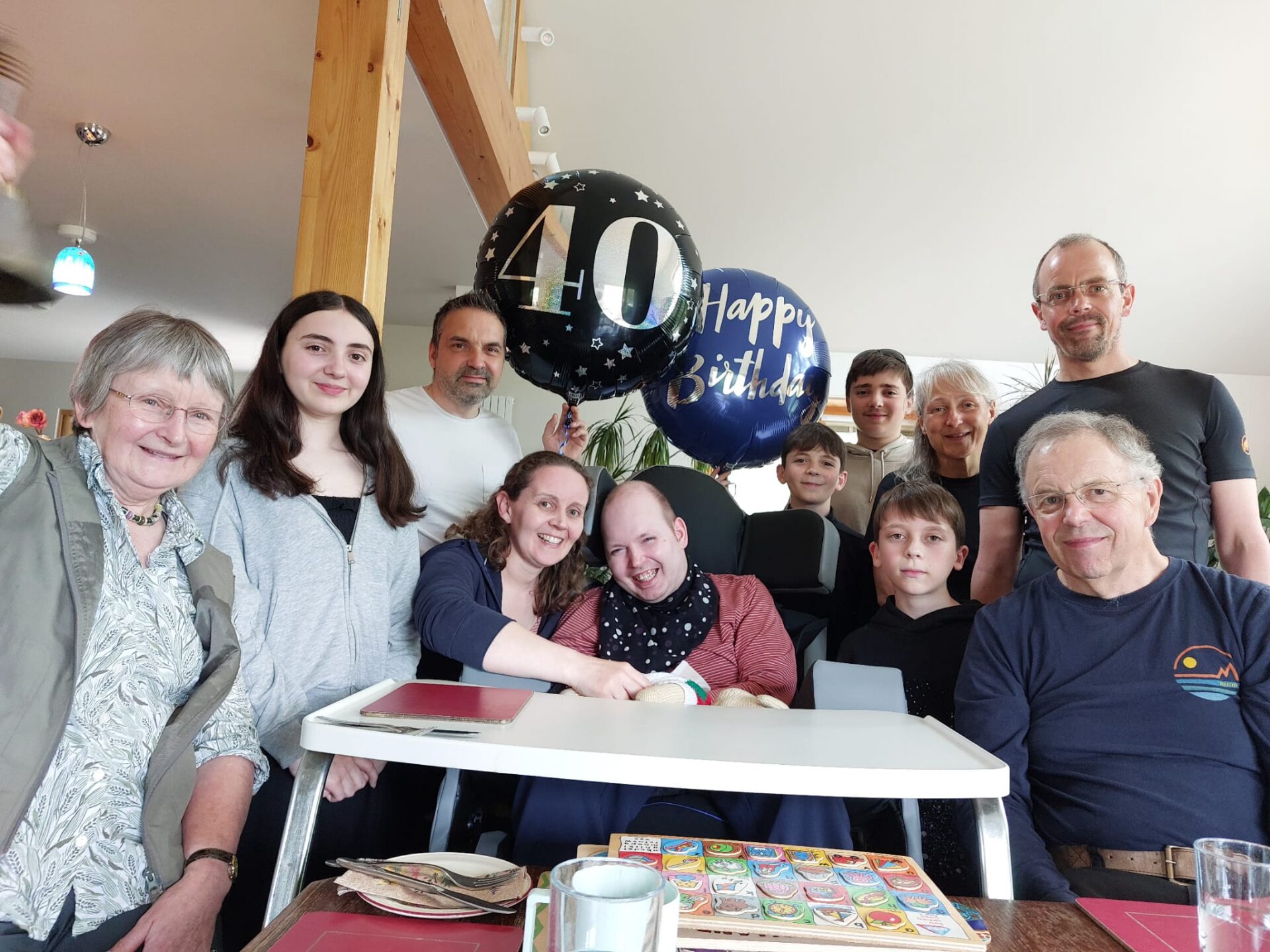
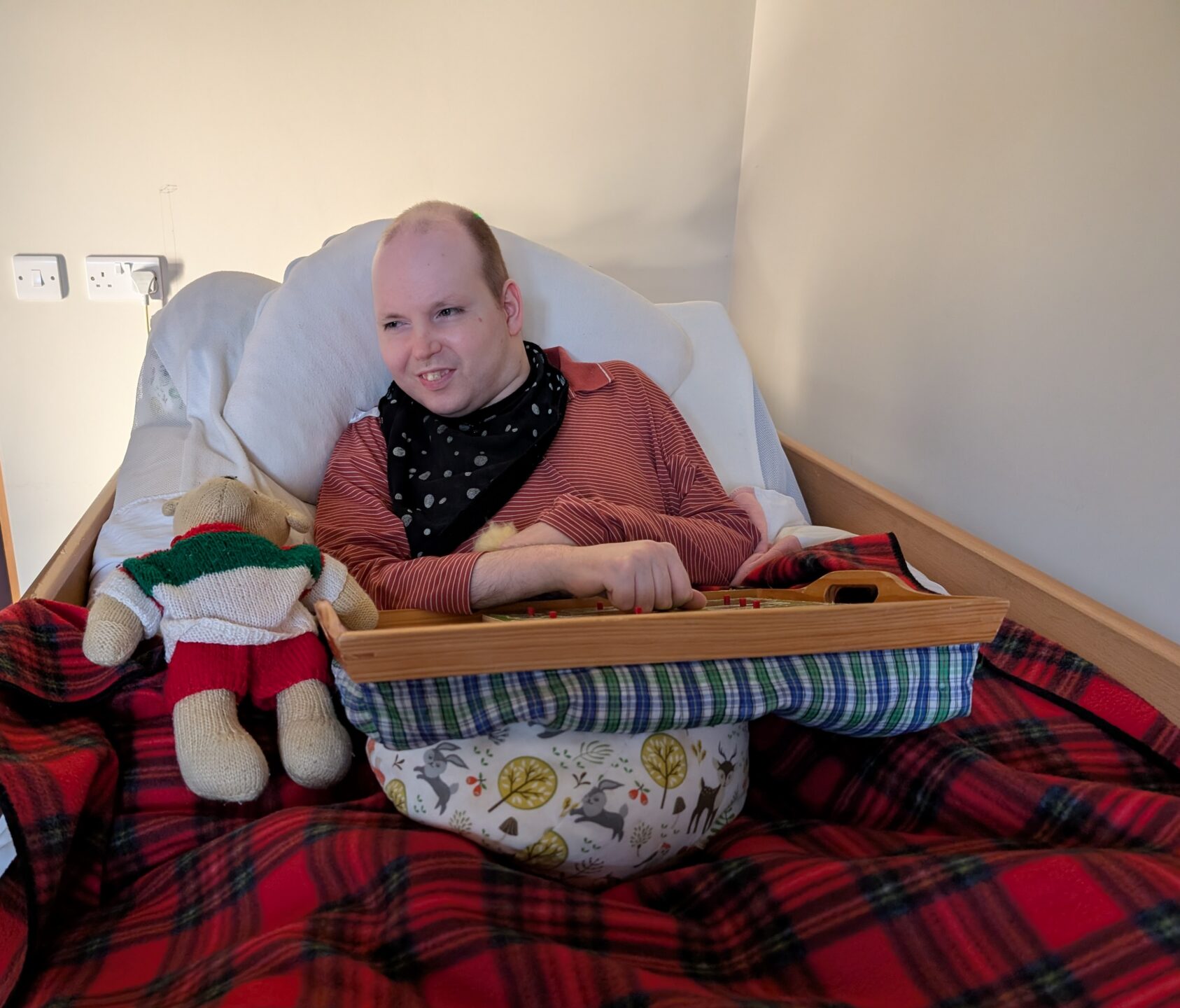
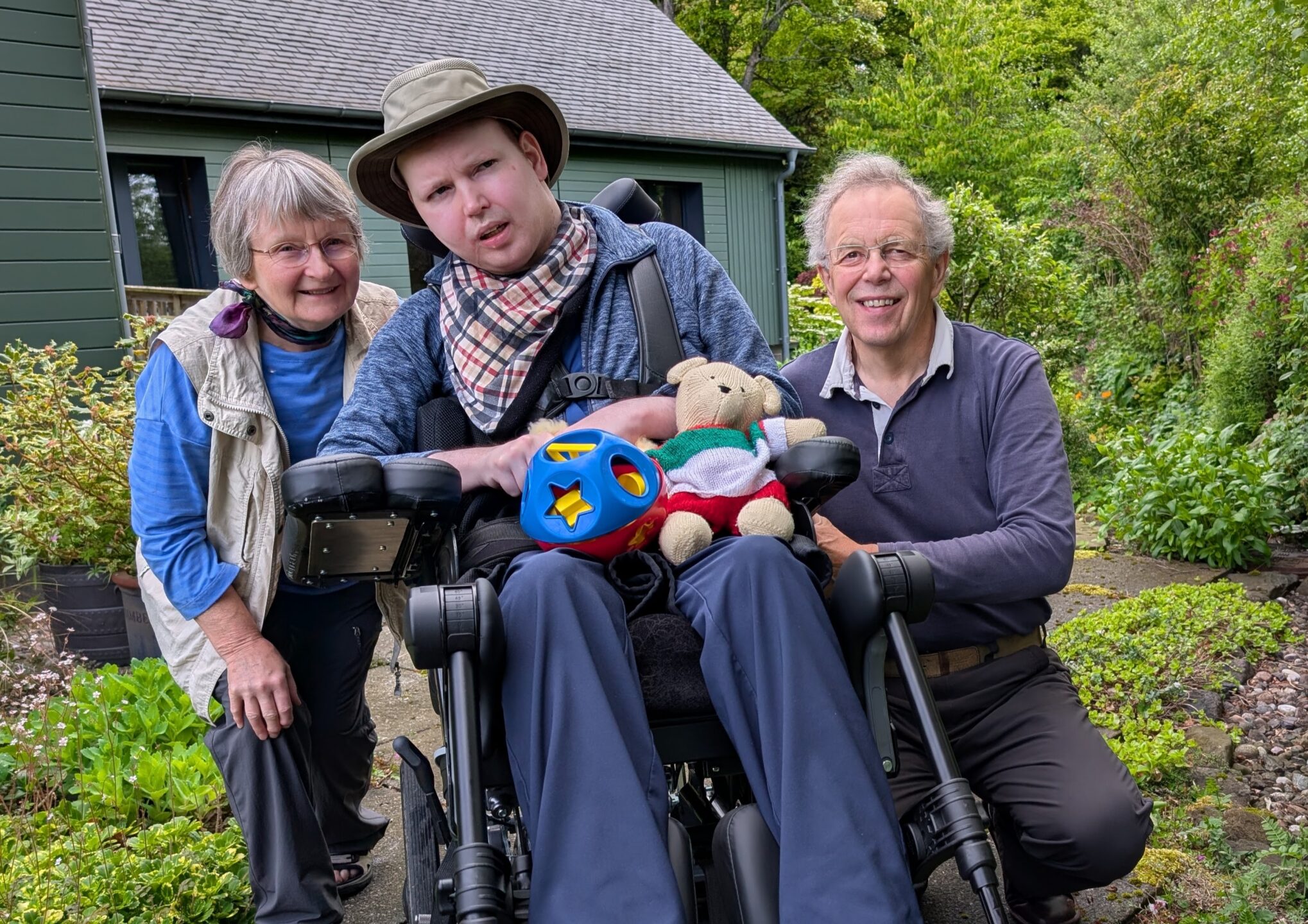
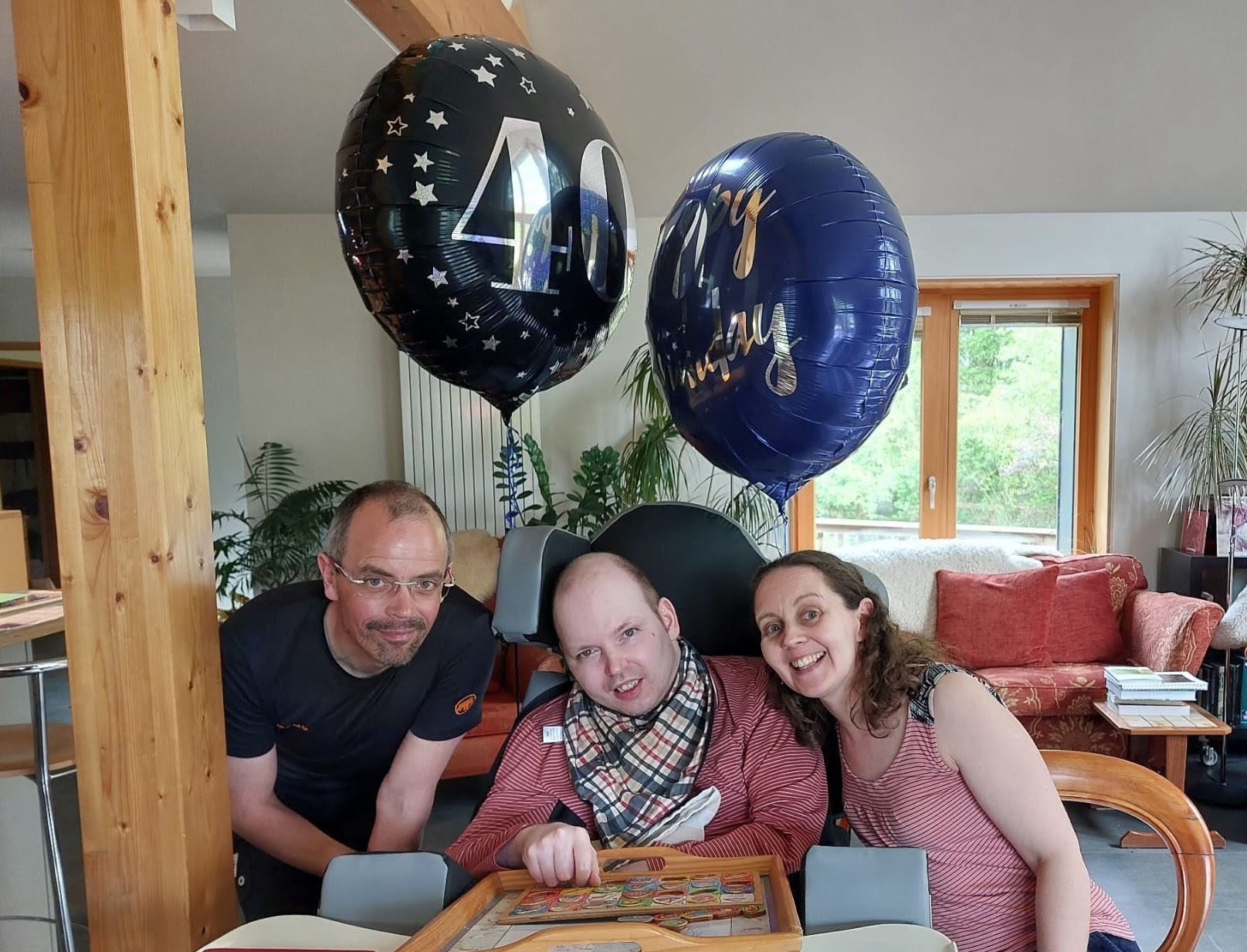
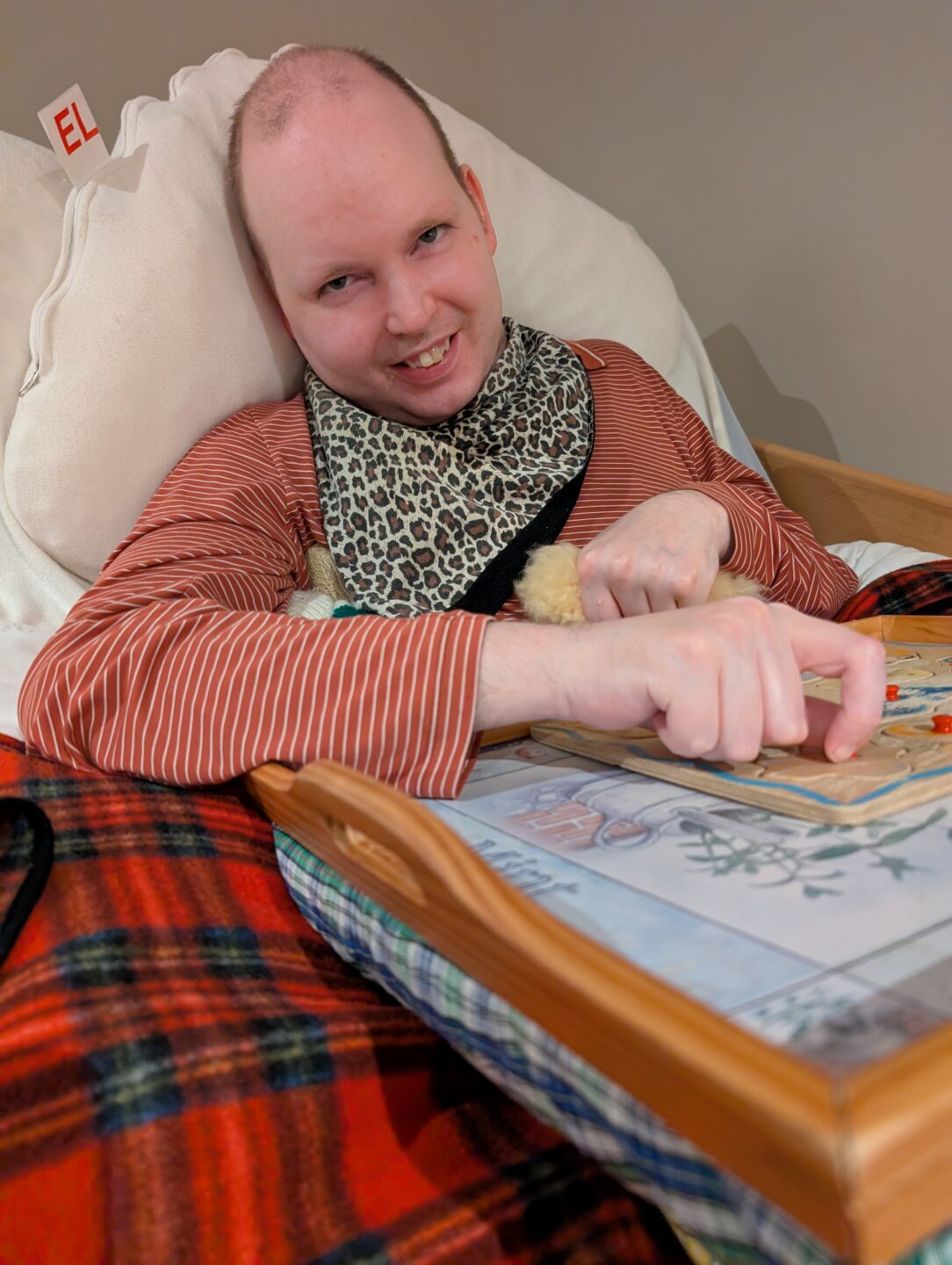
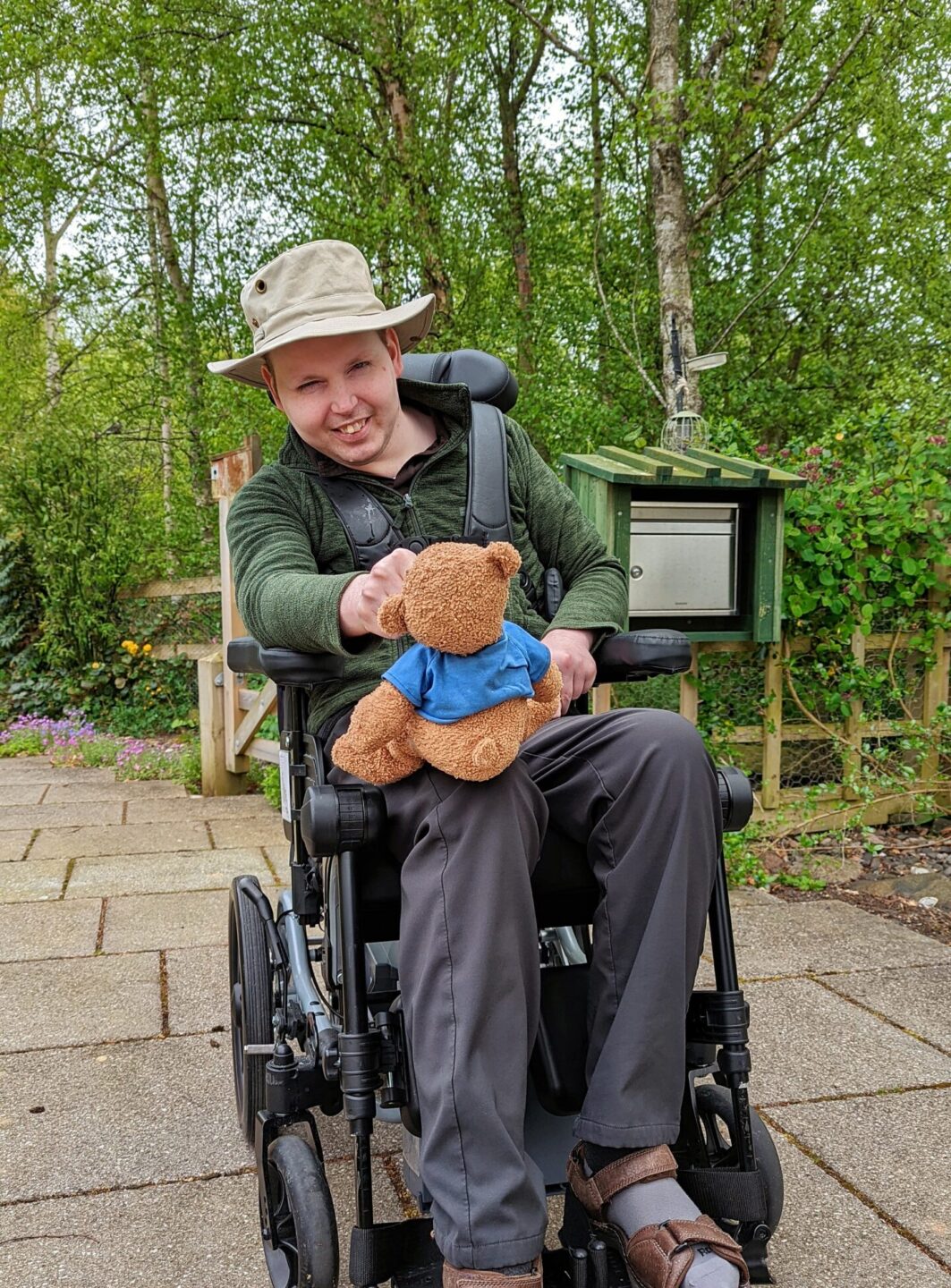
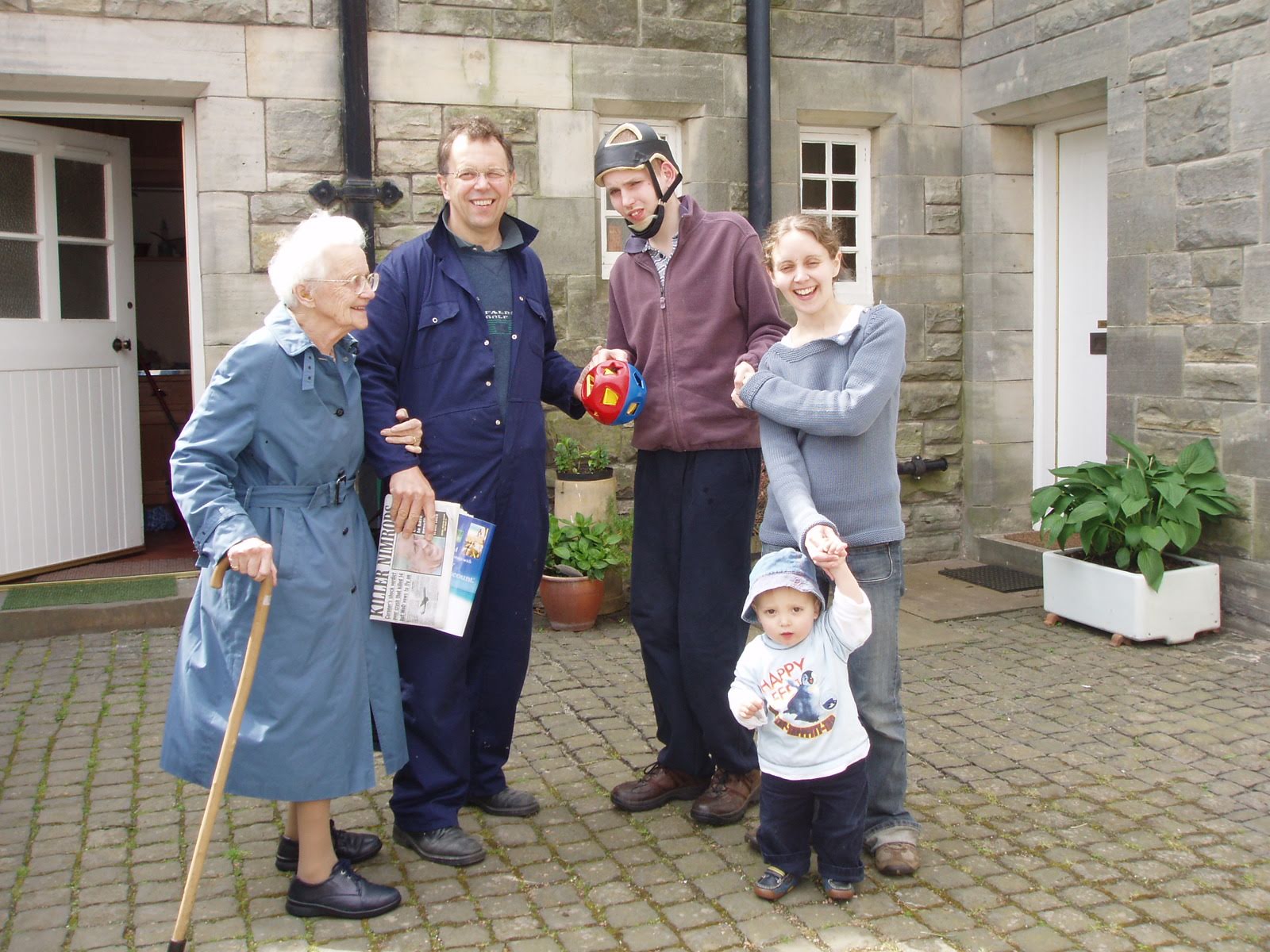
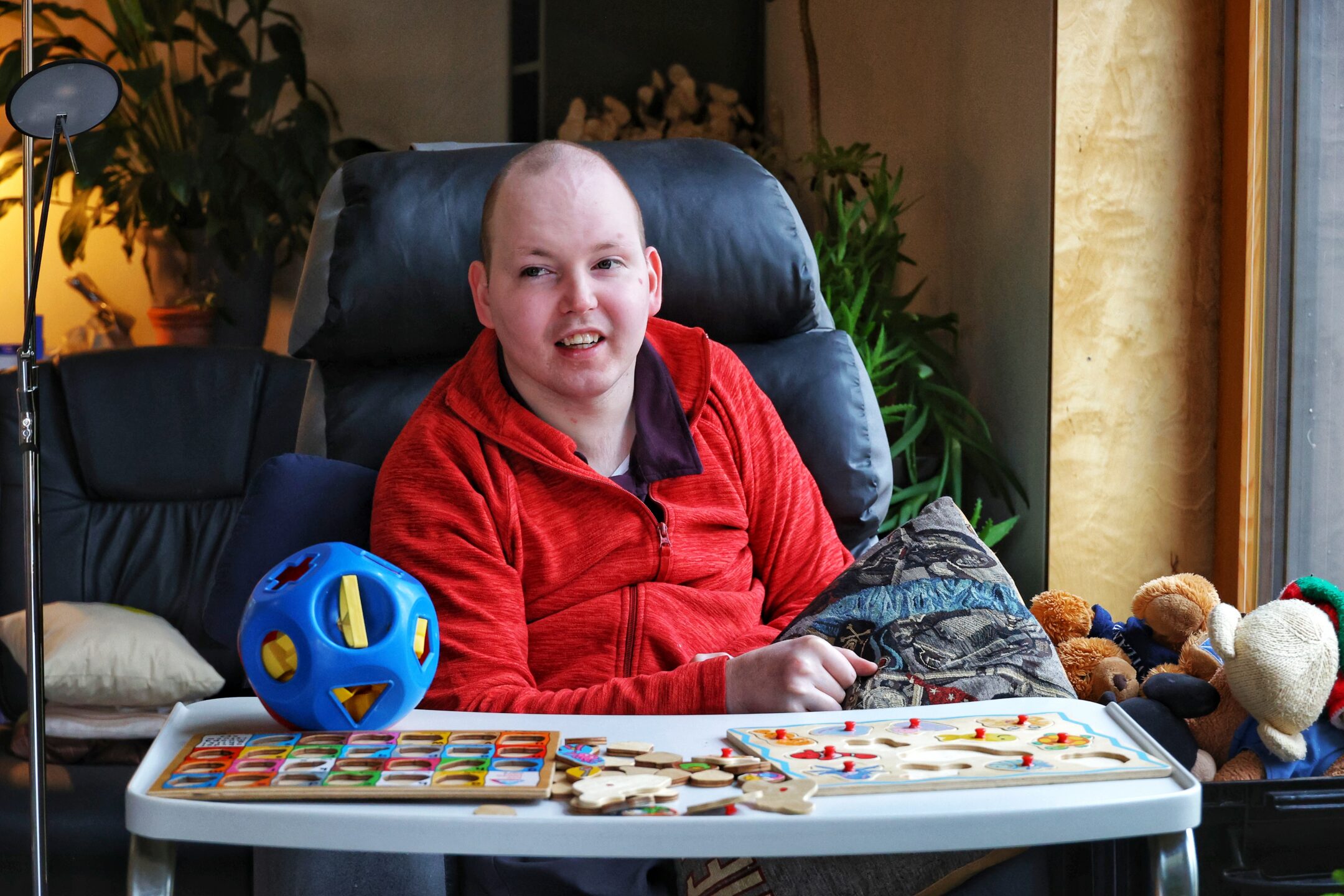
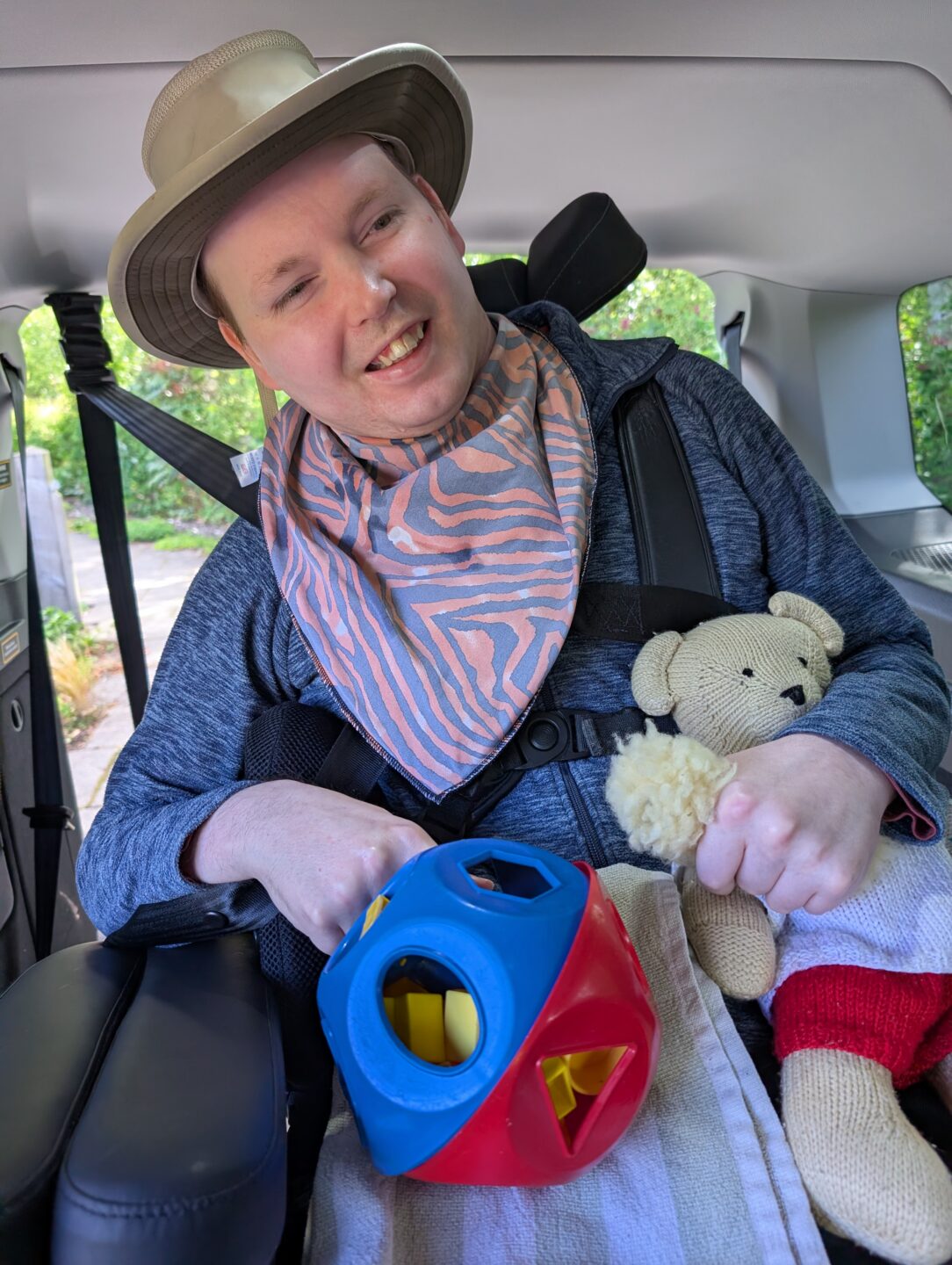
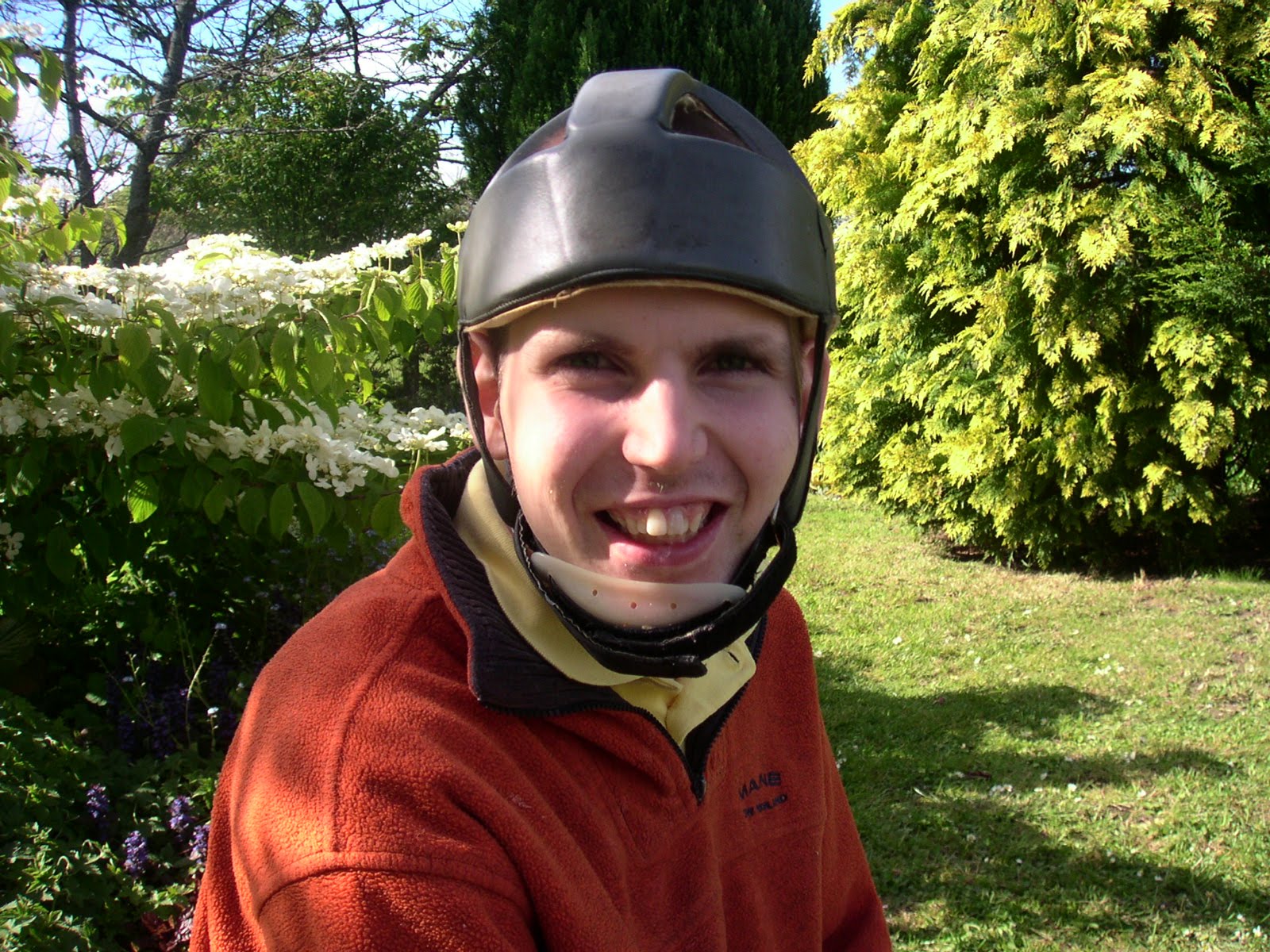
Robbie has always liked jigsaws and plays with them over and over again. His Tupperware ‘Shape-O-Ball’ is now considered a vintage toy but he still likes it. Connect Four is also well used. He likes watching noisy action activities like hoovering or use of a food blender. Outings in his wheelchair accessible vehicle (WAV) are the highlight of his day, and we hope to continue these for as long as possible.
Robbie uses very few ‘words’ but can certainly make his feelings known and he knows how to use his limited vocabulary to best advantage. On good days he can be ‘cheeky’ and ‘play to his audience’ which brightens everyone’s day.
Graham’s late mother used to say that Robbie made her feel very humble – he has faced so many challenges throughout his life but keeps smiling. His ability to bounce back over the years has certainly been amazing. Robbie makes us appreciate the simple things in life that are all too easily taken for granted.
Robbie’s family shared their journey for Dravet Syndrome Awareness Month 2026. For a review of the campaign, click here.
We support all families affected by Dravet Syndrome. Read more here.
Find out more about Dravet Syndrome here.