
Dravet Journeys
Every Dravet Syndrome journey is unique. Read more stories here.
Thomas, aged 18, lives at home with his parents, Scott and Sarah, sister Poppy and brother Louie. He had his first seizure at 10 weeks old. Scott and Sarah share their family’s experience.
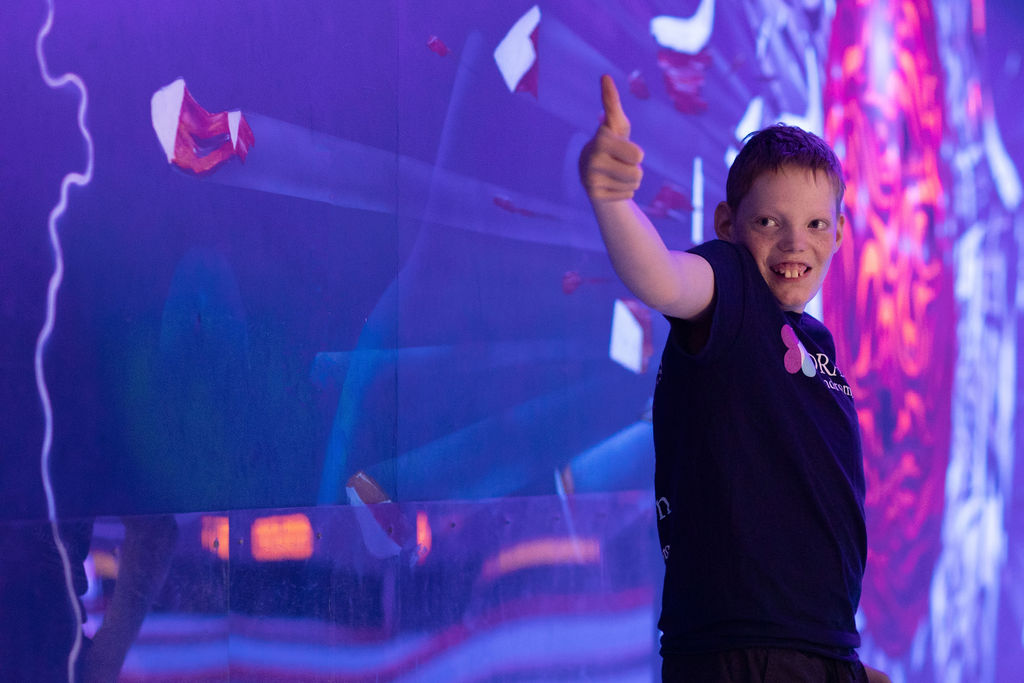
Thomas had his first seizure at around 10 weeks old. It started as a stiff jerking in one arm, ‘punching’ his head. As new parents we didn’t really know what was happening – it didn’t look like a seizure.
At 3 months old, he had the first of many hospital admissions for a prolonged seizure which self-resolved. Initial tests revealed nothing concerning and we were told it was likely a one-off. One month later and after many more trips to hospital trying to show the seizure activity to a doctor, finally a seizure was observed and he had a further admission for initiation of treatment and a brain scan. Thomas was started on medications which we now know are contraindicated in Dravet Syndrome and the seizures continued and worsened.
Gaining a diagnosis
Thomas underwent more invasive tests, including lumbar puncture, with no diagnosis initially identified. It was us that first identified Dravet Syndrome as a potential diagnosis following a Young Epilepsy Conference where so many of his symptoms were described, and we raised this with the neurologist at Great Ormond Street. He did not think it was Dravet Syndrome but agreed to request the genetic blood tests. It was therefore not until Thomas was aged 2.5 years old that he received the diagnosis of Dravet Syndrome with a SCN1A mutation.
His main seizure type in those early years were myoclonic jerks, every few seconds of every day, which severely impacted his life. Thomas required an adult’s guarding hand in front of him at all times to prevent him from slamming his head into anything around him, hot food, bathwater, toys etc. He also started having more tonic clonic seizures, which were prolonged and frequently resulted in blue light admission to the local hospital.
Over the years since his diagnosis, Thomas has tried over 10 different medications, the Ketogenic diet and a Vagus Nerve Stimulator (VNS), with some improvements but never sustained, and ultimately without achieving seizure control. The seizures have evolved over the years and he seems to have experienced just about every type. We have become more used to witnessing and dealing with seizures, but they always cause some anxiety and sadness.
The impact on the family
Being the parent or carer of a child with Dravet Syndrome is, at times, like living in the centre of a whirlwind. You have things thrown at you from all directions, often unexpectedly, whilst at the same time you are trying to keep two feet firmly on the ground and acting like everything is absolutely fine.
As parents, we experience many feelings and emotions. There is fear, sadness, guilt, anger, and the unfairness of the whole situation that we as a family find ourselves in. As parents, we fear for the future. We feel guilty because our other children have missed out on attention as Thomas has to take up so much of it. There is the emotional impact of just seeing your child suffer and the feelings of helplessness that go with that.
We have become more used to having so many extra people in our lives helping to take care of Thomas, letting others take care of him at overnight respite and having carers in our home.
Whilst we celebrate everything that Thomas achieves, and he brings us immense joy, we also feel sadness at times when Thomas reaches milestones that make the gap between his peers very stark, like getting GCSEs, passing driving tests and soon going away to university. We are all human after all, and these are our children. It can take a few years to find acceptance, but we found that once we accepted that this is the way our lives are, we have been able to move forward.
As Thomas’ siblings have got older, they have overtaken him cognitively, and he looks to them as other ‘grown ups’ who are there to help him and take care of him. He loves them very much. They have become very good helpers with his care, knowing exactly what to do when he has a seizure. They watch out for him and know how to play with him to keep him safe.
Poppy is a fierce supporter of Thomas and having witnessed the impact of seizures all her life, became upset by people making jokes about seizures at school. She decided to educate her whole school with assemblies on seizures and why they are not funny, bravely talking about Thomas and Dravet Syndrome too.
Daily challenges
Thomas is eighteen now. The seizures are less of a bother, although they always keep us on our toes, and the main issue is his behaviour – the fact he is getting big and not so easy to take care of, unlike when he was younger. We have found that, once you get support in place with regards to help at home and overnight respite, life can settle down somewhat and you get into a routine. It still isn’t easy at times, but we can manage and start to enjoy life our way with some adaptations.
We have had to take on many additional roles over the years, alongside working full time and looking after all our kids. Having a child with complex needs means you have to become a nurse, a social worker, an employer, legal counsel, administrator, care coordinator and trainer. As well as having in depth knowledge of the care act, the education act, the disability discrimination act, a working knowledge of court appeals, as well as knowing how to use a feeding pump, how a VNS works, how to administer the Ketogenic diet, how best to get a blue badge or a wheelchair from wheelchair services, how to get the benefits your child is entitled to, ingenious ways to stop your child taking the SATS monitor off their toes without handcuffing them (that’s a joke by the way if social services are reading this) and so on… and that’s probably not even half of it!
We have become battle hardened over the years. We have had to go to court to get Thomas into a mainstream school. We then had to go to court to get him out of the mainstream school and into a special school. We have had to go to court to get him his entitlement to higher rate DLA. We have had to appeal blue badge decisions and advocate fiercely to get overnight respite and support in the day through direct payments.
My advice is to believe in yourself, don’t be fobbed off. Seek independent advice and shout loudly! Don’t accept something if you aren’t happy with it. Also, remember that where your child is concerned you are the expert. Everything we go through as parents is worth it if it means that our child gets what they need.
Transition to Adulthood
The transition from paediatrics and children’s services to adult services has been a new challenge! We have found the process very daunting and there isn’t a great deal of information provided by the services themselves. Dravet Syndrome UK’s Transition Guide has been a great source of information.
Our biggest lesson has been to ensure to push for meetings and discussions early, as the services themselves won’t necessarily kick in until late in the day.
Thomas has been receiving overnight respite in children’s services, but after his eighteenth birthday last month, this ceased. He had an assessment of needs just before his birthday. Without some pushing from us, this assessment would only have taken place after his birthday, leaving us with a gap in care.
It also came as a bit of a shock at the last paediatric neurology appointment when the neurologist just announced there would only be one more appointment with them. We still have no idea who the adult neurologist will be, but we understand the level of specialist nurse support will not be the same. This level of uncertainty has been a huge source of anxiety and stress for us.
Thomas had a VNS battery change a week after his 18th birthday and as he had not transitioned to adult neurology services yet, his surgery was done under paediatrics. Because of this, we felt that the adult ‘cliff’ that we feared, had not yet happened.
Sadly though, Thomas had a more negative experience this month. He was rushed to hospital after a seizure, underwater in his school swimming lesson. The teachers had done an amazing job and he was not underwater for more than a few seconds. However, there was concern over aspiration pneumonia.
As he is now an adult, Thomas was put into an adult major illness area for observation and spent the night on a trolley in A&E surrounded by elderly people with strokes, falls and heart attacks. I was allowed to stay with him for the night but had to squeeze onto the end of the trolley to sleep. Although this wasn’t ideal, I’m glad I was able to be there and I would definitely recommend to other parents that they request to stay with their young person.
In the morning he was admitted to a ward, again with elderly male patients. Luckily, he could come home without staying another night there. I’m not sure how long the other patients would have tolerated listening to his CBeebies and nursery rhymes!
He is absolutely fine now, but I think it is a sign of things to come and certainly a very different experience to paediatrics.
Support from DSUK
Dravet Syndrome UK has provided us with a network of other families who are in the same position as we are. The online private forum is invaluable for the resource of other families and what they’ve been through. There’s a lot of power in peer support – just speaking to somebody who knows exactly what you’re going through is really empowering.
Each year, we attend the Annual Family Weekend. It’s great to meet other families in person – and Thomas’ siblings enjoy the activities DSUK provides for them too. At those weekends, they’ve made friends who know what it’s like to be a sibling to someone living with Dravet Syndrome, and all that brings.
We’ve been to the DSUK Conferences and learnt so much from all the Professionals who are there. You also get to meet other families who are in the same circumstances to you – it makes such a difference. You go away from the conferences feeling more empowered, because of information that you’ve been given, and because you know you’re not alone.
Dravet Syndrome UK have also supported us by providing a monitor through their Seizure Monitor Fund. Thomas’s seizures are constantly changing and recently he has started having more seizures at bedtime and during the night. We were provided with a Nightwatch monitor, which has given us enormous peace of mind, knowing we will be alerted to these seizures and able to take action.
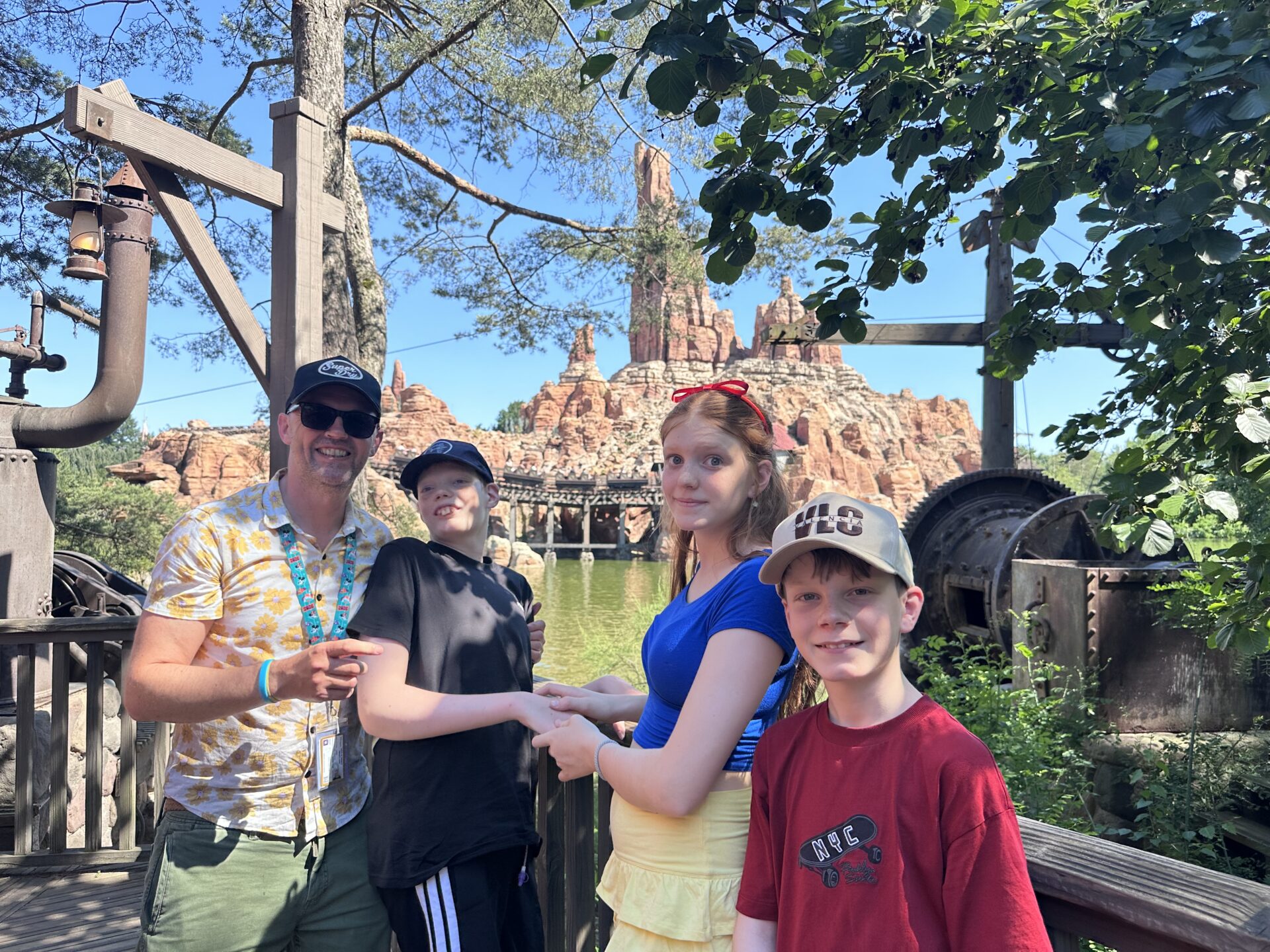
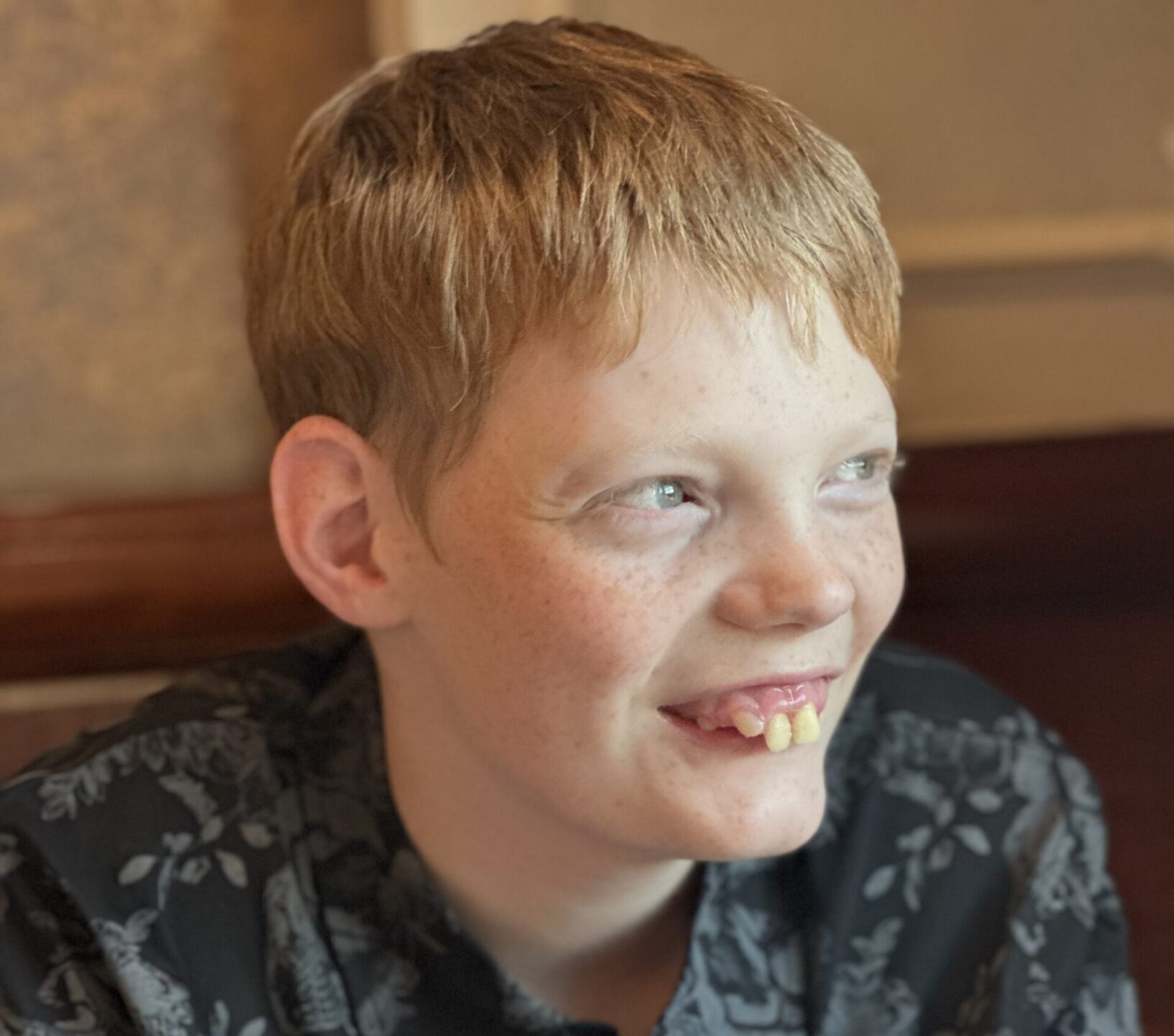
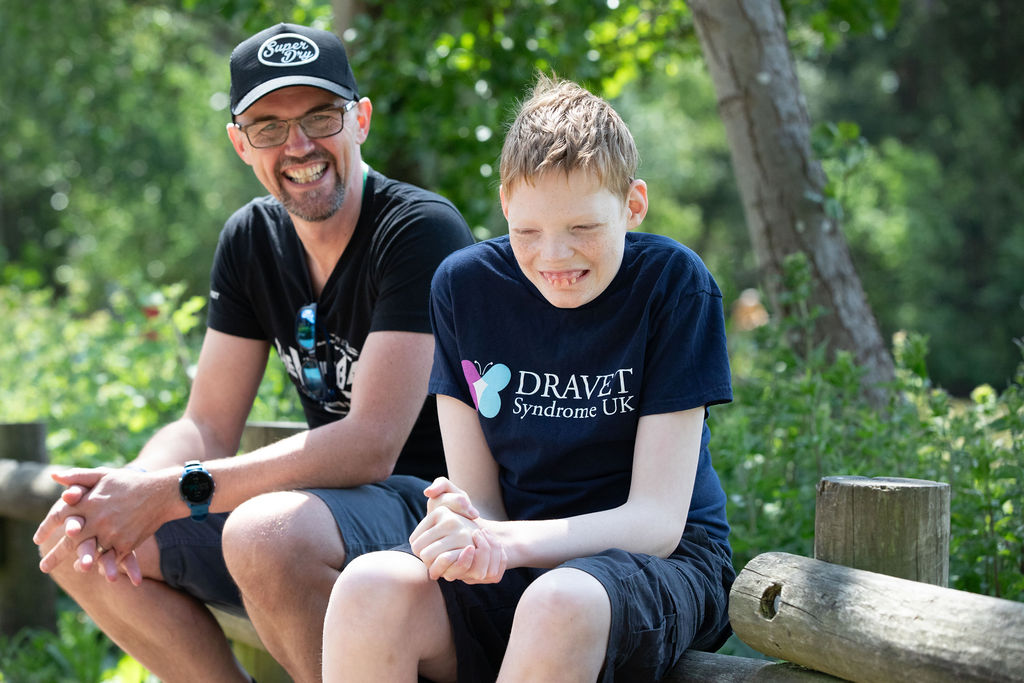
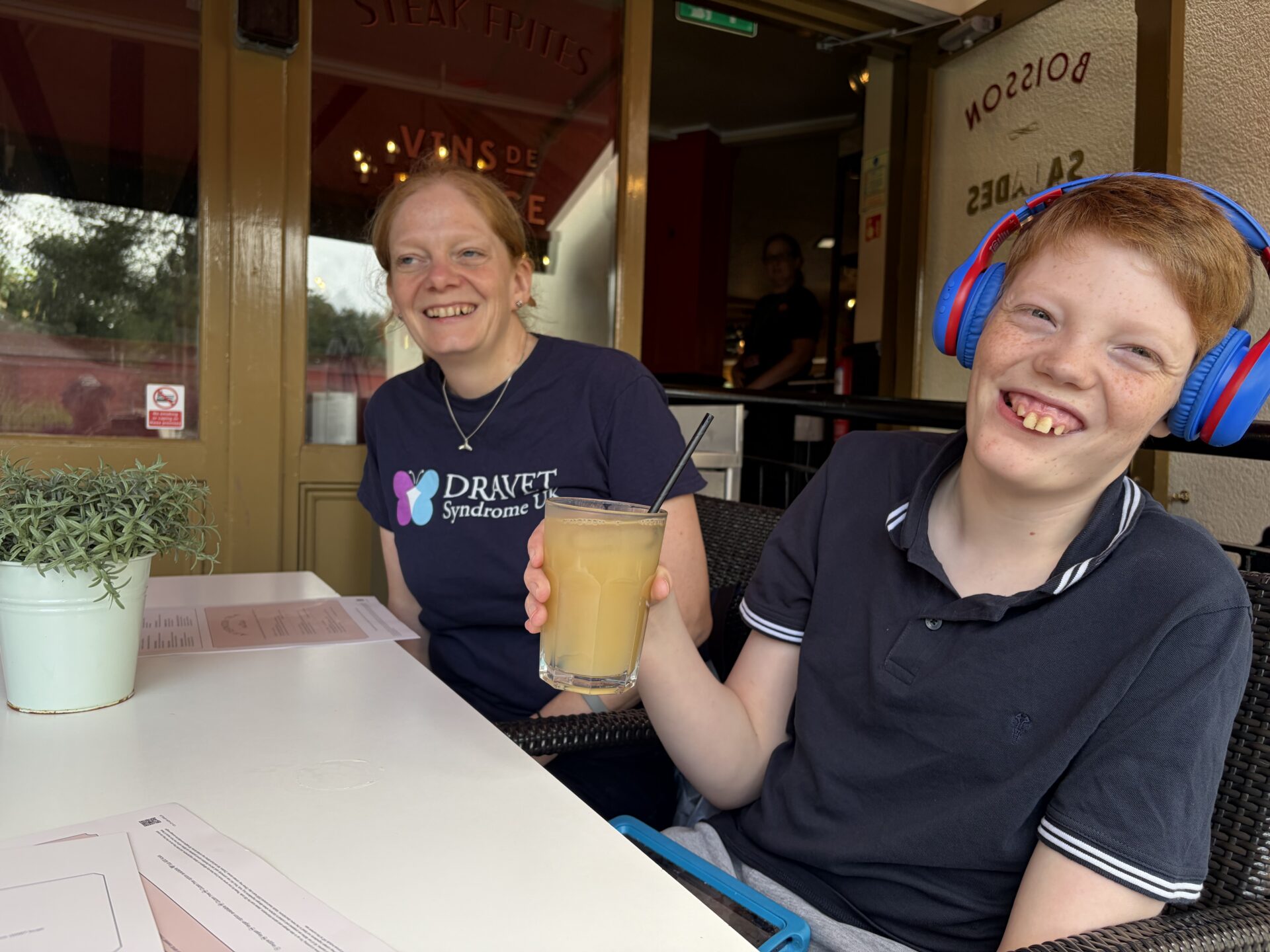
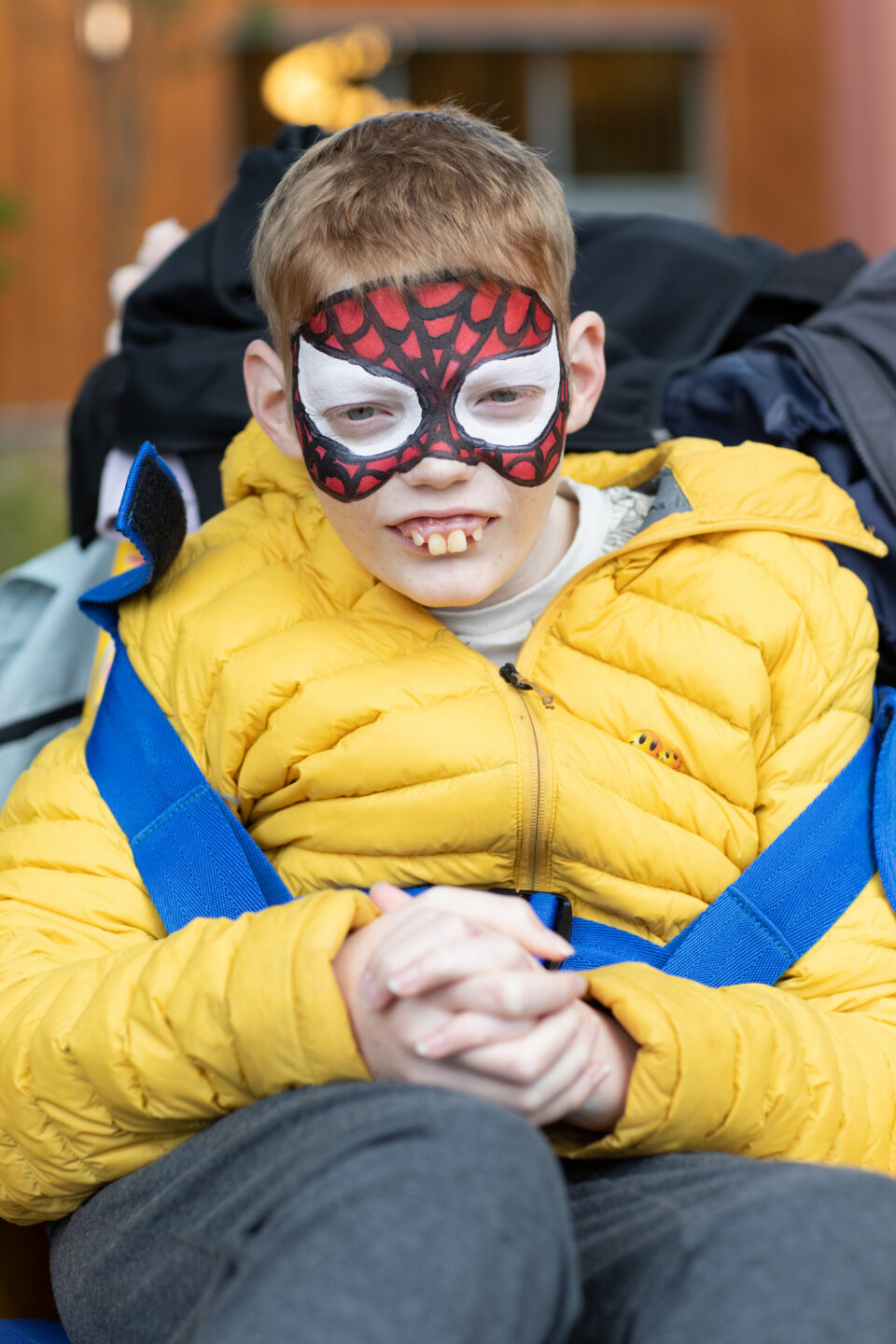
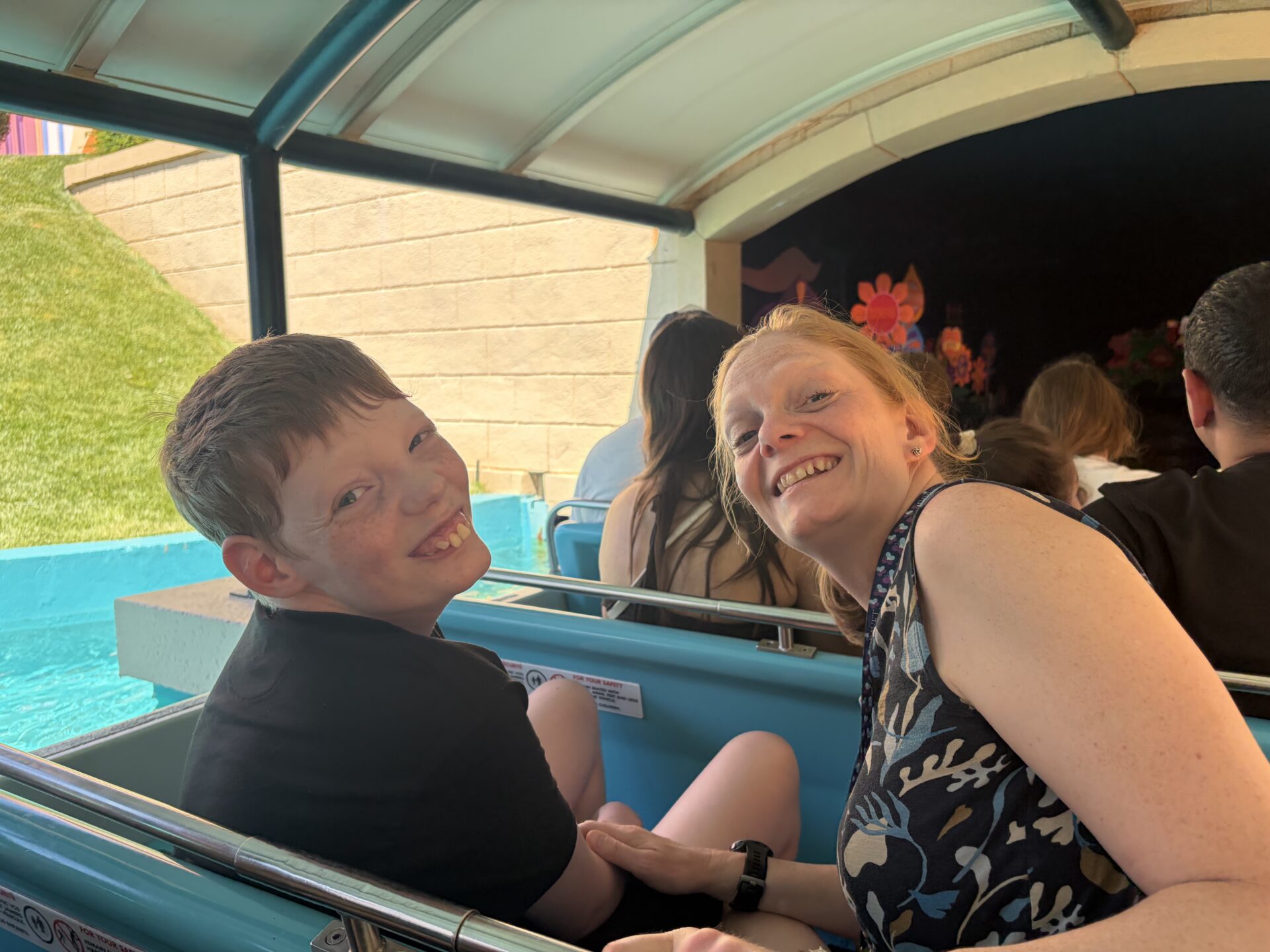
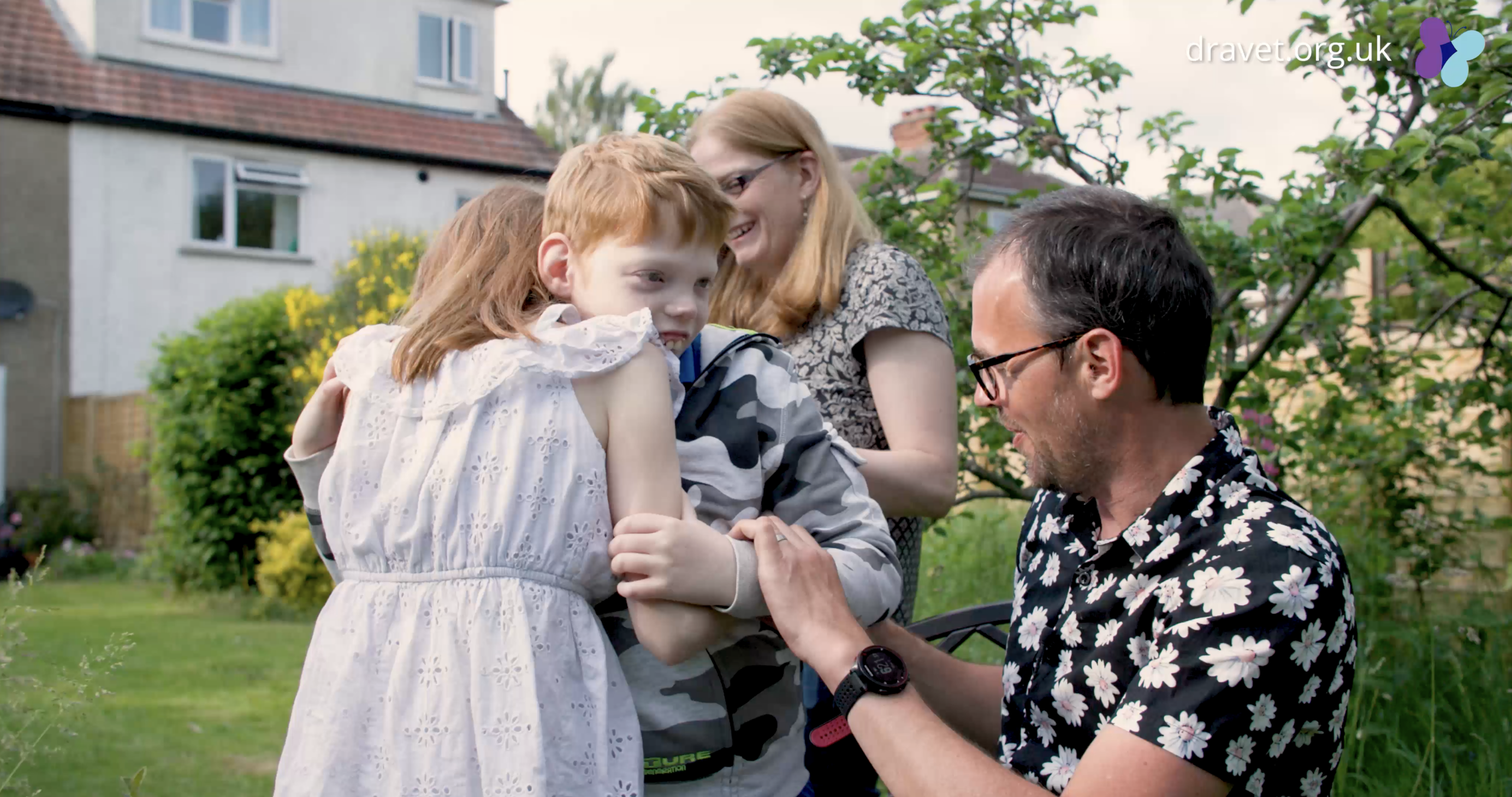
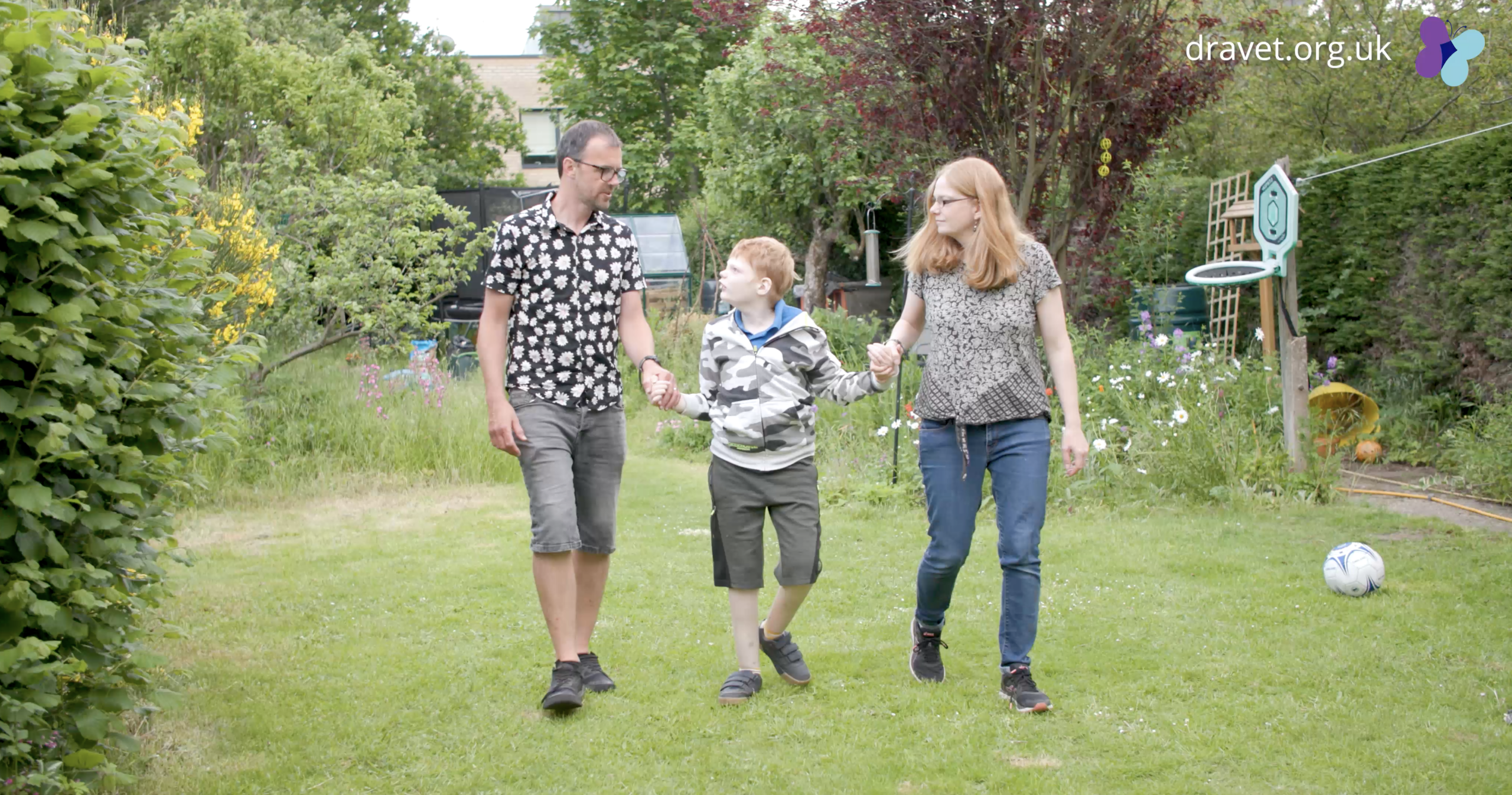
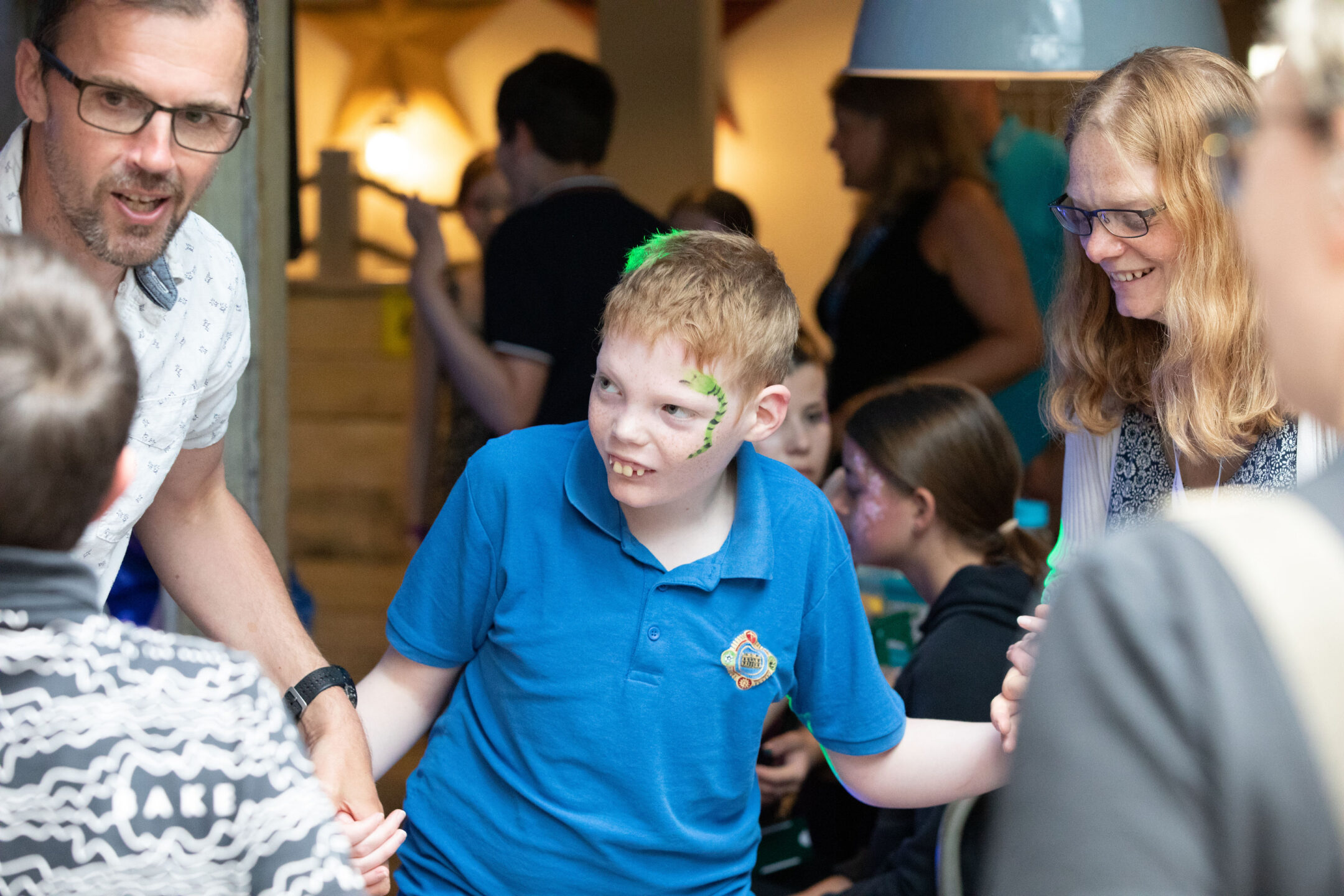
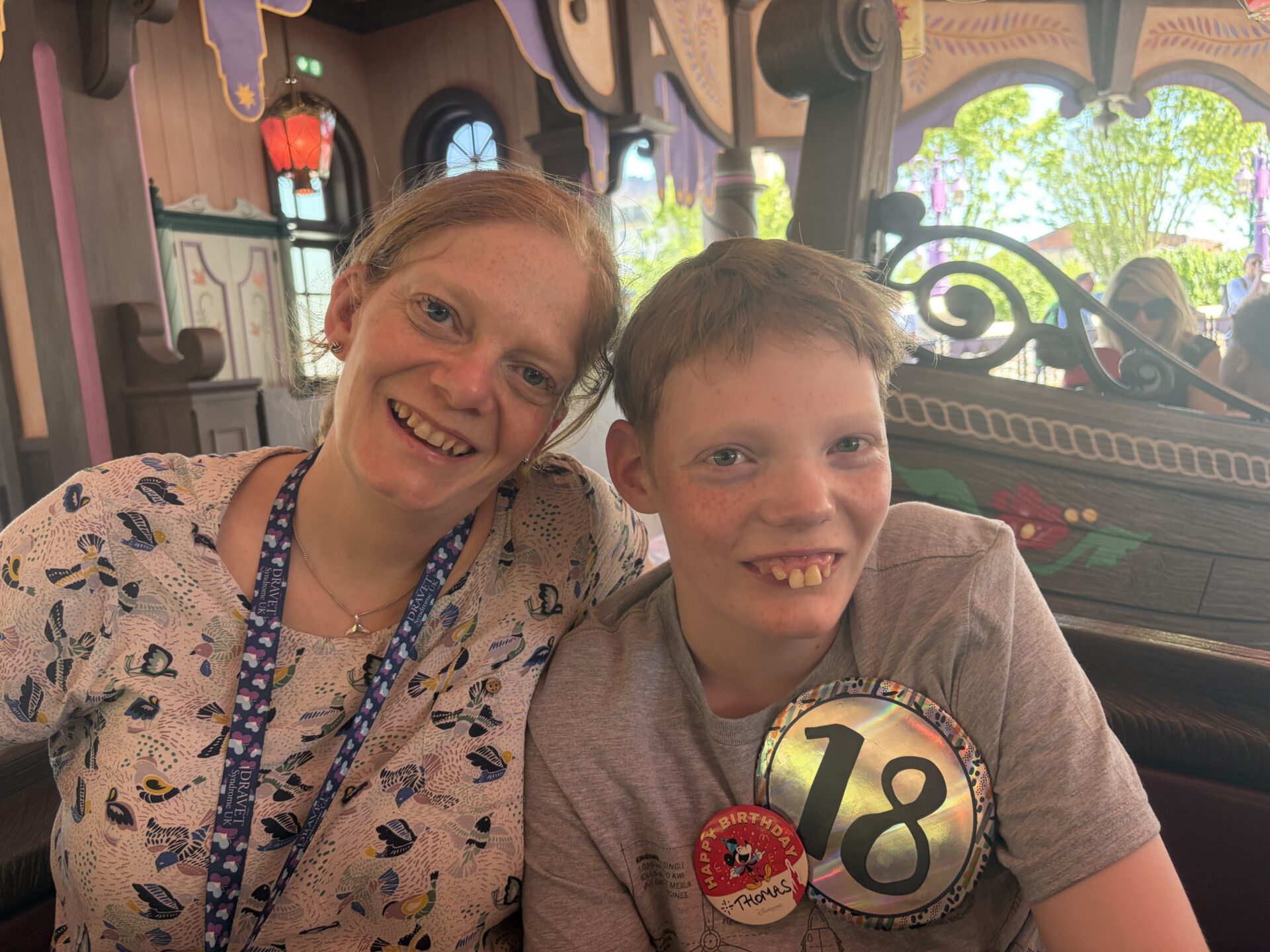
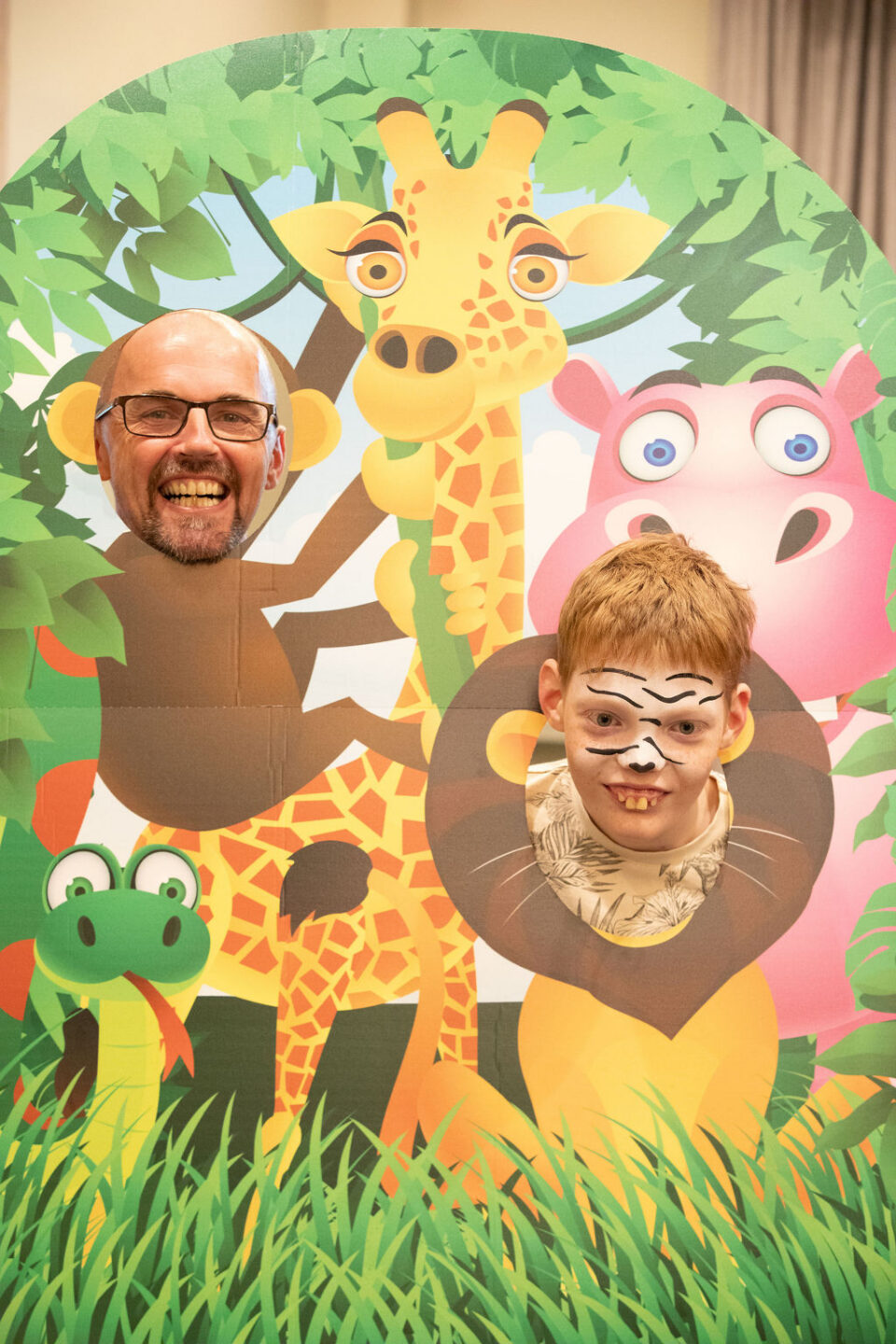
Thomas is unique. He is kind, loving and gives the best hugs! We enjoy so much of what Thomas brings to our lives, his positivity and enjoyment of the things he loves. Even through all the hardships he has endured, he is nearly always happy and smiling.
He loves brass band music (especially the tuba) and has vast contrast in his musical tastes, between nursery rhymes, ‘Country Roads’ by John Denver and ‘Master of Puppets’ by Metallica. He energetically flaps to Formula 1. He loves fire engines and ambulances (we aren’t fans of ambulances), visiting the tiger at the zoo, playing basketball, going to orchestras and brass band concerts and watching the spitfires at Duxford (he has an encyclopedic knowledge of WWII aeroplanes!).
We know that excitement and having too much fun often results in a seizure, but we never want to deny him the opportunity to enjoy himself. We very carefully manage his energy levels and try to be ready for the seizure when it comes.
Through being at a mainstream school for a few years, he has taught other children not to be scared of difference. By meeting Thomas, those children will carry understanding and empathy that can only be a benefit to society.
Due to his kind and loving manner, Thomas leaves an impression with everyone he meets, which makes us extremely lucky to have him and so very proud of him.
Every Dravet Syndrome journey is unique. Read more stories here.
We support all families affected by Dravet Syndrome. Discover more here.
Becoming an adult is a big change for any child. Find out more here.